FAUN.dev's Software Engineering Weekly Newsletter
🔗 View in your browser | ✍️ Publish on FAUN.dev | 🦄 Become a sponsor
🔗 View in your browser | ✍️ Publish on FAUN.dev | 🦄 Become a sponsor

SoftwareEngineeringLinks
This Week in Software Engineering, with Varbear the Bear
📝 A Few Words
🎯 80% of my AI calls now run on my own hardware = 0 API bill for those.
Money wasn't the only point. I stopped paying rent on models my own machine can run. Most developers think running AI locally means weaker results and weekend hacking. So they keep paying per token, forever.
I spent the last 3 months building a different path in another way: local agentic AI with Ollama, LangChain, and MCP.
Then I wrote a book about it: "Local AI Engineering with Ollama". It ships soon. The 25 chapters are done, but I have a question for you.
💡 What do you most want me to go deep on?
1 - Fine-tuning your own model with QLoRA and shipping it to Ollama.
2 - Building a chat app that turns into a tool-calling agent.
3 - Wiring local models to your tools over MCP.
4 - Picking and sizing hardware before you waste money on a GPU.
5 - Building local RAG that answers from your own docs.
🏷️ Everyone who replies to this email with a feedback gets a 50% discount when it ships. I'll DM you!
Have a great day,
Aymen.
Money wasn't the only point. I stopped paying rent on models my own machine can run. Most developers think running AI locally means weaker results and weekend hacking. So they keep paying per token, forever.
I spent the last 3 months building a different path in another way: local agentic AI with Ollama, LangChain, and MCP.
Then I wrote a book about it: "Local AI Engineering with Ollama". It ships soon. The 25 chapters are done, but I have a question for you.
💡 What do you most want me to go deep on?
1 - Fine-tuning your own model with QLoRA and shipping it to Ollama.
2 - Building a chat app that turns into a tool-calling agent.
3 - Wiring local models to your tools over MCP.
4 - Picking and sizing hardware before you waste money on a GPU.
5 - Building local RAG that answers from your own docs.
🏷️ Everyone who replies to this email with a feedback gets a 50% discount when it ships. I'll DM you!
Have a great day,
Aymen.
🔍 Inside this Issue
AI is showing up in two very different roles this week: one as a ruthless bug-finding machine with real money on the line, the other as a teammate you can run on your own laptop. Mix in some hard-earned microservices nostalgia and a tiny perceptron that makes the math feel obvious again, and you have a nicely opinionated grab bag.
🛡️ Hacking Google with A.I. for $500,000
🧩 I built a Go microservices framework in 2017.
🧠 Lessons from building Code: How we use skills
🧪 The Smallest Brain You Can Build
💻 Using local LLMs for agentic coding
Pocket a few ideas, ship something sharper, and call it a win.
Until next time!
FAUN.dev() Team
🛡️ Hacking Google with A.I. for $500,000
🧩 I built a Go microservices framework in 2017.
🧠 Lessons from building Code: How we use skills
🧪 The Smallest Brain You Can Build
💻 Using local LLMs for agentic coding
Pocket a few ideas, ship something sharper, and call it a win.
Until next time!
FAUN.dev() Team
⭐ Sponsors
bytevibe.co
Every developer has force-pushed to the wrong branch at least once. The good ones own it.
This 100% cotton tee is for them. Classic fit, no side seams, no itchy interruptions while you're rebasing your reputation. Black or Irish Green, sizes S to 5XL.
Merge conflicts are forgivable. Bad swag isn't.
Shop now
This 100% cotton tee is for them. Classic fit, no side seams, no itchy interruptions while you're rebasing your reputation. Black or Irish Green, sizes S to 5XL.
Merge conflicts are forgivable. Bad swag isn't.
Shop now

🔗 Stories, Tutorials & Articles
ranpara.net
Devarsh Ranpara builds a single-input perceptron from scratch in Python with browser demos, using the weight, bias, and decision boundary to show why a line forced through zero cannot separate classes that sit far from it.
aafaqzahid.substack.com
Aafaq Zahid open-sourced Keel, a Go microservices framework he extracted from eight years of production systems.
blog.alexewerlof.com
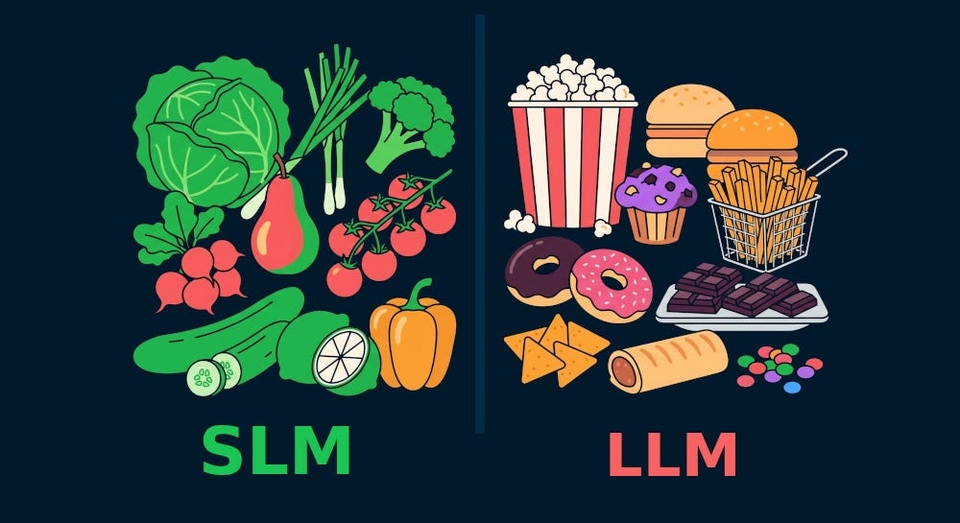
Alex Ewerlöf walks through running open-weight models like Gemma 4 locally for agentic coding via LM Studio, wiring them into Copilot and Pi as custom endpoints, with the practical traps around context length, KV-cache quantization, and cold-start prompt processing.
claude.com
The Claude Code team catalogs Anthropic's hundreds of internal skills into 9 categories, arguing the best skills fit one cleanly and that verification skills deliver the highest measurable gains, worth an engineer-week each.
brutecat.com
A security researcher used an AI fuzzing harness against 1,500+ Google APIs and earned $500,000 in bug bounties, surfacing access-control flaws across Google Voice, Widevine, AdExchange, and internal Cloud Console GraphQL endpoints.
⚙️ Tools, Apps & Software
github.com
Self-hosted dev sandboxes with preview URLs. One command. No Kubernetes, perfect for coding agents and Saas factories
github.com
A tool for creating and running Linux containers using lightweight virtual machines on a Mac. It is written in Swift, and optimized for Apple silicon.
github.com
Security scanner for AI agent skills. Detect vulnerabilities, malicious patterns, and security risks.
github.com
Distributed, in-memory key/value store and cache. It can be used as an embedded Go library and a language-independent service.
🤔 Did you know?
Did you know that Linux can patch a running kernel without rebooting, using a tool called kpatch? Instead of editing the live code in place, kpatch loads the fix as a kernel module and uses ftrace, the kernel's built-in function tracer, to reroute callers from the old function to the new one right at its entry point. The old code stays in memory until every thread still inside it has finished, so for a brief window two versions of the same function exist side by side. That overlap is exactly why kpatch rejects changes that alter how data is stored or what a function fundamentally means: you cannot make those safe just by flipping a pointer.
🤖 Once, SenseiOne Said
"Dev tools promise to save time by hiding complexity; the bill shows up when you need to debug what the tool did on your behalf. The senior move is to automate the work and keep the understanding manual."
— SenseiOne
— SenseiOne
😂 Meme of the week