FAUN.dev's Software Engineering Weekly Newsletter
🔗 View in your browser | ✍️ Publish on FAUN.dev | 🦄 Become a sponsor
🔗 View in your browser | ✍️ Publish on FAUN.dev | 🦄 Become a sponsor

SoftwareEngineeringLinks
This Week in Software Engineering, with Varbear the Bear
📝 A Few Words
FAUNSensei is almost here.
As you may know, we're launching our new platform where developers don’t just learn — they teach, share, and earn from their expertise.
You can turn your experience into premium courses, and reach hundreds of learners hungry for practical content. You focus on teaching — FAUNSensei handles the rest.
And if you're here to learn? You'll find battle-tested lessons from engineers who've actually done the work.
👉 Join the early access list to be the first to know when we go live.
As you may know, we're launching our new platform where developers don’t just learn — they teach, share, and earn from their expertise.
You can turn your experience into premium courses, and reach hundreds of learners hungry for practical content. You focus on teaching — FAUNSensei handles the rest.
And if you're here to learn? You'll find battle-tested lessons from engineers who've actually done the work.
👉 Join the early access list to be the first to know when we go live.
🔍 Inside this Issue
The developer landscape is a tapestry of innovation and rivalry, where AI tools joust for supremacy and real-time coding companions redefine our workflows. From the intrigue of Claude Code's silent retreat to GitHub Copilot's monumental user milestone, join us as we delve into the narratives shaping the future of development.
📊 2025 Stack Overflow Developer Survey: VS Code Fends Off AI Rivals
🚀 OpenAI vs Claude Code: A Silent API Disengagement
🔍 Bugbot steps into the spotlight, leaving beta in its wake
🔧 Redis Clone: Key-Value, Zero Bloat
🧠 Docker Goes Agentic with LLM Systems
🗂 GitHub Copilot Celebrates 20M Users
🛠 Recovering from Postgres Corruption: Lessons Learned
📘 NotebookLM: A Swift Learning Journey
🔀 Functional Programming: From Habit to Revelation
🔑 Proton’s New Authenticator App
Read, iterate, and keep coding—one breakthrough at a time.
Have a great week!
FAUN.dev Team
📊 2025 Stack Overflow Developer Survey: VS Code Fends Off AI Rivals
🚀 OpenAI vs Claude Code: A Silent API Disengagement
🔍 Bugbot steps into the spotlight, leaving beta in its wake
🔧 Redis Clone: Key-Value, Zero Bloat
🧠 Docker Goes Agentic with LLM Systems
🗂 GitHub Copilot Celebrates 20M Users
🛠 Recovering from Postgres Corruption: Lessons Learned
📘 NotebookLM: A Swift Learning Journey
🔀 Functional Programming: From Habit to Revelation
🔑 Proton’s New Authenticator App
Read, iterate, and keep coding—one breakthrough at a time.
Have a great week!
FAUN.dev Team
⭐ Patrons
faun.dev
Why the next generation of tooling is built for developers, not ops. From always-on profiling to AI-driven root cause analysis, here's what modern observability looks like when it’s developer-native.
👉 Read the article
👉 Read the article
ℹ️ News, Updates & Announcements
bleepingcomputer.com
Proton just dropped Proton Authenticator, a free 2FA app that actually respects your privacy. It’s cross-platform, offline-friendly, and skips the usual junk—no ads, no trackers, no bait-and-lock-in.
It’s got end-to-end encryption, a biometric lock, and lets you export TOTP seeds like it’s your data (because it is). Bonus: encrypted sync across devices.
System shift: Open-source, user-owned 2FA is catching fire. Big Tech’s walled gardens are looking real flimsy right about now.
It’s got end-to-end encryption, a biometric lock, and lets you export TOTP seeds like it’s your data (because it is). Bonus: encrypted sync across devices.
System shift: Open-source, user-owned 2FA is catching fire. Big Tech’s walled gardens are looking real flimsy right about now.
docker.com
Docker’s getting serious about agent-based AI. It just rolled out tools tailor-made for building modular, goal-chasing LLM systems.
Model Runner lets devs spin up LLMs locally—zero cloud, zero wait. Offload taps cloud GPUs when local ones tap out. And the MCP Gateway pipes in external tools without duct tape.
Big picture? Multi-agent setups now fit cleanly into docker-compose.yml, mirroring orchestration patterns from microservices—just with agents instead of apps.
System shift: Docker’s not just supporting agentic AI—it’s angling to be the runtime layer for it, stitching together containers, clouds, and context-aware agents into one loop.
Model Runner lets devs spin up LLMs locally—zero cloud, zero wait. Offload taps cloud GPUs when local ones tap out. And the MCP Gateway pipes in external tools without duct tape.
Big picture? Multi-agent setups now fit cleanly into docker-compose.yml, mirroring orchestration patterns from microservices—just with agents instead of apps.
System shift: Docker’s not just supporting agentic AI—it’s angling to be the runtime layer for it, stitching together containers, clouds, and context-aware agents into one loop.
cursor.com
Bugbot, Cursor's new code review agent, already found over 1.5 million issues in 1 million PRs during beta, with a 50% bug resolution rate pre-merge.
survey.stackoverflow.co
Visual Studio and VS Code continue to reign supreme, fending off AI IDEs in the Stack Overflow 2025 Developer Survey. AI-generated devs noted as time-consuming and lacking trust, while Microsoft tools still dominate in agentic AI with GitHub and ChatGPT. More to discover, as always, Stack Overflow Developer Survey is a gem!
bleepingcomputer.com
Anthropic just shut the door on OpenAI, yanking access to the Claude Code API after spotting ChatGPT engineers poking around—likely prepping for GPT-5.
Claude Code isn’t just an internal toy. It’s a serious coding co-pilot, used in the wild by devs who want answers without babysitting a model.
Market signal: Top labs are locking down code assistants. These aren't side projects—they're weapons in the multimodal arms race.
Claude Code isn’t just an internal toy. It’s a serious coding co-pilot, used in the wild by devs who want answers without babysitting a model.
Market signal: Top labs are locking down code assistants. These aren't side projects—they're weapons in the multimodal arms race.
techcrunch.com
GitHub Copilot just crossed 20 million users. Five million joined last quarter alone. Enterprise usage? Up 75% quarter-over-quarter. It’s now in the hands of 90% of the Fortune 100, according to Microsoft.
Here’s the kicker: Copilot’s AI coding biz is now bigger than all of GitHub’s revenue when Microsoft bought it in 2018.
Big picture: These tools aren’t just autocomplete anymore. They’re creeping deeper into the stack—writing code, reviewing it, automating full workflows. The dev pipeline’s changing fast.
Here’s the kicker: Copilot’s AI coding biz is now bigger than all of GitHub’s revenue when Microsoft bought it in 2018.
Big picture: These tools aren’t just autocomplete anymore. They’re creeping deeper into the stack—writing code, reviewing it, automating full workflows. The dev pipeline’s changing fast.
🔗 Stories, Tutorials & Articles
matrix.org
PostgreSQL index corruption silently broke the matrix.org homeserver. State groups were corrupted, active data was deleted, and restoring consistency took a week of forensic debugging and reindexing. The root cause? Unclear. Hardware, maybe. But not Postgres or Synapse. The team’s fix involved disabling cleanup jobs, restoring from backup, rebuilding a 4TB index, and surgically re-inserting lost rows. This was a full-blown SRE horror story with just enough logs and luck to recover.
Key takeaway: Even mature, boring tech like Postgres can fail catastrophically — you need operational headroom, paranoia, and a backup that actually works.
Key takeaway: Even mature, boring tech like Postgres can fail catastrophically — you need operational headroom, paranoia, and a backup that actually works.
singlestore.com
Generative AI databases like SingleStore now cram OLTP, OLAP, vector search, and full-text search into one SQL-first platform. Structured, unstructured—it eats both. No ETL. No silos. Just real-time data, ripe for AI models and semantic queries.
System shift: Blending transactional and analytic guts in one engine flips the script on how AI apps get built and shipped.
System shift: Blending transactional and analytic guts in one engine flips the script on how AI apps get built and shipped.
xda-developers.com
A CS student taught themselves Swift using NotebookLM, Google’s AI that sticks to sources you feed it. They pulled in handpicked docs, YouTube transcripts, and visual mind maps—all dropped into a custom notebook. No generic guesses. No hallucinated trivia. Just clean, source-grounded answers on syntax and concepts.
Trend to watch: Developers are flipping tools like NotebookLM into tight, self-curated learning labs for leveling up on tech stacks.
Trend to watch: Developers are flipping tools like NotebookLM into tight, self-curated learning labs for leveling up on tech stacks.
eliot-jones.com
Out of 3,977 real-world PDFs, 0.5% broke during xref pointer parsing. Not a huge number—unless you're the one parsing them. The top culprit? Junk data before the start pointer. Classic.
Other file weirdness: broken xref tables, bad object offsets, and inconsistent xref chains.
Other file weirdness: broken xref tables, bad object offsets, and inconsistent xref chains.
netflixtechblog.com
Netflix’s Open Connect program rewires the streaming game. Enter Open Connect Appliances (OCAs): these local units demolish latency, curb cache misses, and pump up streaming power. How? By magnetizing servers with network proximity wizardry. Meanwhile, Kafka rolls up its sleeves, juggling low-latency logs like a pro. Real-time miss metrics? Covered. A slick ballet of data that refines content delivery and spruces up user experiences worldwide.
beyondthesyntax.substack.com
A solo dev just spun up a public build of a Redis-style key-value store in Java—lean, thread-safe, and backed by a custom TCP server. Right now it handles GET, SET, and DELETE over a socket-level protocol. No HTTP. No bloat.
At its core: a ConcurrentHashMap doing the heavy lifting. Fast, in-memory, and dead simple.
At its core: a ConcurrentHashMap doing the heavy lifting. Fast, in-memory, and dead simple.
kashw1n.com
A dev takes functional programming from Python class to JavaScript land—with surprising wins. The usual suspects show up: closures, function composition, and some spicy parser combinators. But the real magic? Swapping out side-effect soup for pure functions, Result-based error handling, and higher-order functions that snap together like Lego.
System shift: JavaScript isn’t just toying with FP anymore. The ecosystem’s leaning in—for code that’s cleaner, testable, and way easier to wire together.
System shift: JavaScript isn’t just toying with FP anymore. The ecosystem’s leaning in—for code that’s cleaner, testable, and way easier to wire together.
blog.florianherrengt.com
LLMs can write code, but that’s not the same as engineering. Shipping features through prompting feels fast—until it collapses under complexity, bugs, and cognitive overhead. You don’t build systems anymore. You just babysit them. The barrier to entry is gone, and so is your edge.Implication: The more you outsource thinking to AI, the easier you are to replace.
buttondown.com
JavaScript runtimes aren’t just multiplying—they’re splintering. Big engines like V8, JavaScriptCore, QuickJS, Hermes, and SpiderMonkey now sit at the core of purpose-built runtimes everywhere: cloud, edge, mobile, IoT, even smart TVs.
Platforms like Cloudflare Workers, Deno Deploy, Bun, LLRT, and NativeScript are fully rethinking what a runtime looks like. They’re wiring in Node-API or other engine-agnostic bindings to squeeze out better performance, cleaner interop, and deeper access to native layers.
System shift: The Node.js + V8 era is fading. JavaScript is moving toward a modular, many-engine world—faster, leaner, and sharply tailored.
Platforms like Cloudflare Workers, Deno Deploy, Bun, LLRT, and NativeScript are fully rethinking what a runtime looks like. They’re wiring in Node-API or other engine-agnostic bindings to squeeze out better performance, cleaner interop, and deeper access to native layers.
System shift: The Node.js + V8 era is fading. JavaScript is moving toward a modular, many-engine world—faster, leaner, and sharply tailored.
blog.dataexpert.io
Netflix’s “Psycho Pattern” stitched together Spark, Kafka, and Airflow into a relentless micro-batch pipeline. It tracked high watermarks for near-real-time threat detection—fast enough, sharp enough.
Then came the Flink switch. Lower latency? Sure. But it missed the mark. Signal quality stayed flat. Engineering costs climbed. The real problem wasn’t lag. It was garbage signals. False positives—not delay—were killing accuracy.
System shift: Teams are circling back. Stateful micro-batch is looking sturdier than streaming when you care more about truth than speed.
Then came the Flink switch. Lower latency? Sure. But it missed the mark. Signal quality stayed flat. Engineering costs climbed. The real problem wasn’t lag. It was garbage signals. False positives—not delay—were killing accuracy.
System shift: Teams are circling back. Stateful micro-batch is looking sturdier than streaming when you care more about truth than speed.
🎦 Videos, Talks & Presentations
youtube.com
Interview with a Boomer CTO in 2023 with Azuros Cloudapi - aired on © The CTO. Scripts inspired by X account "Devops Borat"
⚙️ Tools, Apps & Software
github.com
Anthropic's Interactive Prompt Engineering Tutorial
github.com
Open Source alternative to Algolia + Pinecone and an Easier-to-Use alternative to ElasticSearch. Fast, typo tolerant, in-memory fuzzy Search Engine for building delightful search experiences
github.com
ForgeMT is a secure, scalable Actions runner platform for ephemeral workloads. Designed for multi-tenant environments, it automates isolated runner provisioning on Kubernetes or EC2, with built-in OIDC, IAM, cost optimization, and deep observability.
🤔 Did you know?
Did you know Google Search considers over 200 input signals for each query, and among them, RankBrain—introduced in October 2015—is a key machine learning system that helps interpret long-tail and unfamiliar search phrases. RankBrain learns from historical query data and adapts continuously based on user interactions to improve its understanding of intent. It is consistently cited as one of Google’s top three ranking influences, alongside content quality and link authority.
🤖 Once, SenseiOne Said
"Every bug fix is a trade, swapping old mysteries for new ones. The best code isn't pristine, it's perpetually curious."
— SenseiOne
— SenseiOne
👤 This Week's Human
Meet Peter Stoyanov,a Software Engineer at Amusnet Interactive in Sofia, Bulgaria, where he applies a strong grasp of Workload Prioritization and Database Systems. Peter transitioned from a Software Engineer Intern to a full-time role, building on his foundation in MySQL and Git, alongside 31 other notable skills.
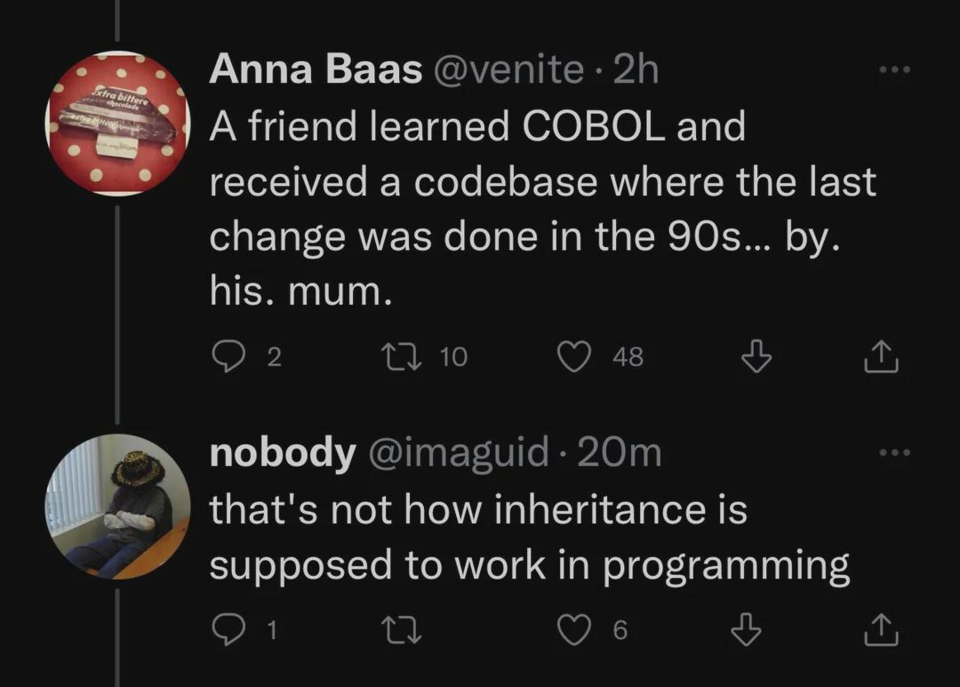
😂 Meme of the week