FAUN.dev's Kubernetes Weekly Newsletter
 🔗 View in your browser. | ✍️ Publish on FAUN.dev | 🦄 Become a sponsor

KubernetesLinks
This Week in Kubernetes, with Kaptain the Shark
📝 A Few Words
Kubernetes 1.33 dropped—and it’s stacked. Native sidecars, in-place pod resizing, smarter scheduling, and dynamic PVCs are just the start. Toss in new Amazon EKS tricks and some Istio wisdom, and you’ve got a release cycle that feels more like a full-blown ops evolution.
🧬 Kubernetes 1.33 “Octarine” brings native sidecars and pod resizing
🔧 Mutable CSI Node Allocatable Count lands in v1.33
🔍 Dynamic Resource Allocation gets new features before v1.34
🧠 Amazon EKS rolls out auto repair and node monitoring
🛠️ EKS Auto Mode Workshop: deploy an app in 1 command
🎢 Istio + Kubernetes = the smartest theme park
💾 PVC provisioning on EKS: tradeoffs, configs, and performance
🚨 Kubeconfig pitfalls and the supply chain risks they hide
🧰 Uber’s migration from Mesos to Kubernetes—no bumps, all speed
🧠 Discord’s Kubernetes-powered search indexes trillions of DMs
From cluster chaos to mesh mastery—this one's worth a deep dive.
🧬 Kubernetes 1.33 “Octarine” brings native sidecars and pod resizing
🔧 Mutable CSI Node Allocatable Count lands in v1.33
🔍 Dynamic Resource Allocation gets new features before v1.34
🧠 Amazon EKS rolls out auto repair and node monitoring
🛠️ EKS Auto Mode Workshop: deploy an app in 1 command
🎢 Istio + Kubernetes = the smartest theme park
💾 PVC provisioning on EKS: tradeoffs, configs, and performance
🚨 Kubeconfig pitfalls and the supply chain risks they hide
🧰 Uber’s migration from Mesos to Kubernetes—no bumps, all speed
🧠 Discord’s Kubernetes-powered search indexes trillions of DMs
From cluster chaos to mesh mastery—this one's worth a deep dive.
⭐ Patrons
faun.dev
Are you building cool stuff in DevOps, AI, or Kubernetes? Publish on FAUN.dev and get your content in front of thousands of developers and engineers.
📢 Write and get discovered!
👉 Start posting here.
📢 Write and get discovered!
👉 Start posting here.

bytevibe.co
Fuel your coding sessions with the Kubernetes Mug — a sleek, durable 11oz ceramic essential for any developer or DevOps pro. Dishwasher and microwave safe with a sharp, double-sided design, it’s the perfect blend of style and function.
✔️ Ships fast.
♥️ Built to last.
✔️ Ships fast.
♥️ Built to last.

ℹ️ News, Updates & Announcements

aws.amazon.com
Amazon EKS just leveled up. Node monitoring and auto repair now save you from node drama, kicking out defective nodes without breaking a sweat. NMA handles the heavy lifting, even throwing in GPU checks, making it a game-changer for ML workloads.
aws.amazon.com
Amazon EKS Auto Mode tosses the headaches of Kubernetes cluster management to AWS. It dynamically tunes resources, making life easier for your apps. Feeling lazy? The workshop deploys an app with just one command, all while delivering beefy, scalable solutions. Oh, and you’ll master it in two hours flat.
www.infoq.com
Kubernetes 1.33 rolls out as the hero of sidecar containers, smoothing out their lifecycle wrinkles. Now, sidecars launch before and wrap up after the main event—your app containers. Meanwhile, in-place pod resizing steps up to beta status. Tweak resources without nuking your app’s smooth run—a gift for stateful apps and databases that hate disruptions.
kubernetes.io
Kubernetes v1.33 beta rolls out topology-aware volume provisioning, nudging pod scheduling in the right direction. It cleverly takes node storage capacity into account, unleashing the full potential of resource utilization.
kubernetes.io
Kubernetes v1.33 hits the scene swinging with an alpha feature that's shaking things up: dynamic volume limits. CSI drivers now sharpen pod scheduling accuracy while kicking outdated capacity errors to the curb.
kubernetes.io
Kubernetes Dynamic Resource Allocation (DRA) is shaking up device management. Expect tools like Driver-owned Resource Claim Status for tracking device data like a hawk, and Partitionable Devices to squeeze max juice from resources. Keep an eye out: DRA goes full throttle in v1.34, making device handling a breeze and sprinkling in some smarts.
🐾 From FAUNers
faun.pub
Setting up AWS EKS for PVCs isn't just a click-and-go deal. It requires rolling up your sleeves for EBS or EFS CSI driver deployments and nailing down IAM configurations. EBS rocks for single-node access and performance-driven work. EFS, on the other hand, is perfect for shared RWX access—though its performance? Let's just say it's not winning any awards.
faun.pub
Service Mesh charges in like a caped crusader, taming unruly systems. It orchestrates traffic with cunning precision, restoring order with a flick of its digital cape.
faun.pub
Kubernetes turns microservices into a theme park—Pods are the joyrides, and StatefulSets? They're the memory-bound attractions. Istio? Think of it as the grumpy but efficient supervisor, managing traffic and keeping security in line.
🔗 Stories, Tutorials & Articles
uber.com
Uber dumped Mesos and hitched its ride to Kubernetes, rolling out a fleet of clusters across regions with sleek automation. They didn’t just switch platforms — they rewired the engine room. Thanks to crafty scheduling tweaks and sidecar tricks, devs didn’t feel a bump. All gas, no brakes on their cloud-native journey.
hackernoon.com
Aliases slash command lengths to mere blips. A pristine .dockerignore trims the fat, speeding up image creation. Multi-stage builds churn out sleek, secure images with zero fuss. Docker Compose overrides? They separate environments with ease, evicting any messy configs. Keep your system nimble with regular Docker cleanups—because who needs a chokepoint? Way to go, Docker! You've turned clunky into a joyride.
towardsdatascience.com
Knowledge Graphs organize data in a human-like way. GraphRAG enhances LLMs by using a graph-based approach for more effective information retrieval and generation. Graphs reveal cross-document relationships, advancing search systems for data scientists and ML engineers. Neo4j and LangChain enable this complex, production-ready pipeline, setting a high standard for knowledge representation. Streamlit and Docker facilitate demoing and containerizing this efficient workflow.
discord.com
Discord's revamped search engine leans on Kubernetes and the Elastic Kubernetes Operator to shake up its query structure. No more lumbering clusters. They’ve split them into smaller, sprightlier versions. With this new trick, Discord can now efficiently index and search your DMs, thanks to savvy sharding per user instead of the old channel method.
www.microsoft.com
Kubernetes packs a punch, but it drags along some gnarly new security headaches. Wrangling those containerized risks? That's the real rodeo.
medium.com
Automate Kubernetes backups by harnessing Longhorn wizardry and storing with MinIO. Even with manual steps, this bolsters resilience. In production, make automation and security top priorities—prepared to tango with real-world catastrophes.
blog.iainsmart.co.uk
Kubeconfig files, those sneaky little devils, can throw open the door to peril in AWS EKS. They hand over the keys to the kingdom by sneaking in unapproved exec directives. If you're not paying attention, you risk a security meltdown. Dig deep into these files. Get lazy, and you're practically begging for a supply chain breach that could topple your clusters. Keep your guard up—your infrastructure depends on it.
ngrok.com
ngrok's Kubernetes Operator takes the tangle out of K8s networking. Picture this: labyrinthine paths shrink into tidy URLs, and traffic feels the firm hand of Traffic Policy. Get ready for v1.0. It promises shiny, new features and bids farewell to "edges" in favor of a sleek focus on endpoints. Expect smoothness wrapped in simplicity.
⚙️ Tools, Apps & Software
github.com
A flexible solution for multi-cluster configuration management for edge, multi-cloud, and hybrid cloud
github.com
A FAST Kubernetes manifests validator, with support for Custom Resources!
🤔 Did you know?
Did you know that Instagram started as a monolithic Django (Python) app—and it still largely is? Despite handling over a billion users, Instagram has managed to scale its core architecture without fully switching to microservices. Instead, the team optimizes the monolith with powerful caching layers (like Memcached), sharded databases, and asynchronous task queues powered by Celery and RabbitMQ. This proves that with the right engineering, even a well-structured monolith can support hyper-scale platforms.
🗣️ Quote of the week
"Maintenance programmer coming after us is likely to suffer the consequences of any surprising change pattern we’ve left in the design. Software bugs thrive on surprises." ~ from " Software Design X-Rays " by Adam Tornhill
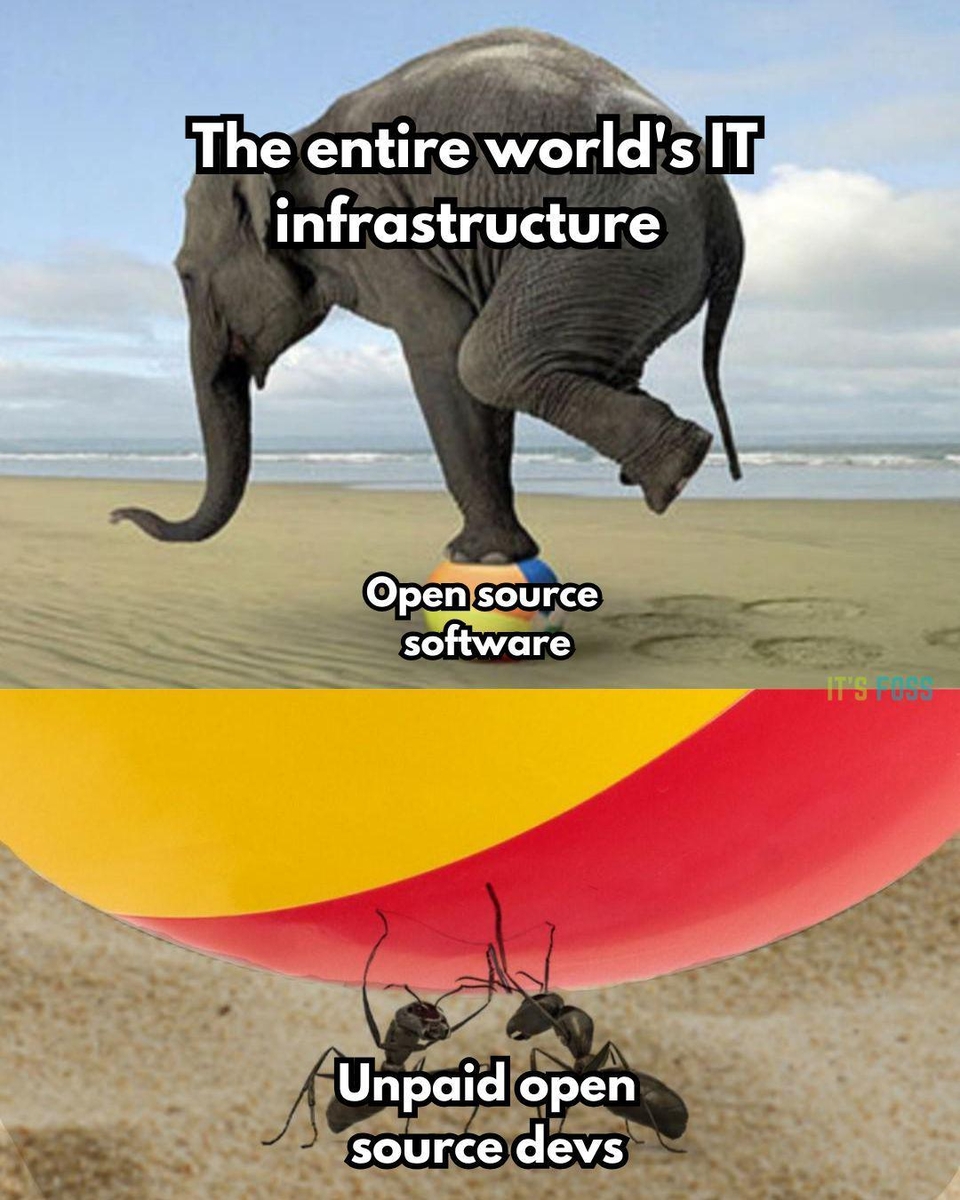
😂 Meme of the week