FAUN.dev's DevOps / SRE / Platform Engineering Weekly Newsletter
 🔗 View in your browser. | ✍️ Publish on FAUN.dev | 🦄 Become a sponsor

DevOpsLinks
This week in DevOps, with Dolly the Cow
🔍 Inside this Issue
Reliability is moving left: skip the standalone SRE org, and LLMs still flinch when the pager rings. Meanwhile the stack is leveling up—from Rust-first telemetry and Dynamo’s Paxos lineage to Bazelized monorepos, Git worktrees, serverless DuckDB, and pragmatic cost/secret hygiene; details inside.
🧯 6 Reasons You Don't Need an SRE Team
📊 AWS Billing and Cost Management now provides customizable Dashboards
🐧 Best Linux distro for developers of 2025
🤖 Can LLMs replace on call SREs today?
🗄️ Dynamo, DynamoDB, and Aurora DSQL
🦀 Evolving our real-time timeseries storage again: Built in Rust for performance at scale
🔑 Hunting Living Secrets: Secret Validity Checks Arrive in GitHub Advanced Security for Azure DevOps
🛠️ Migrating Airbnb’s JVM Monorepo to Bazel
🦆 Using DuckDB in AWS Lambda
🌲 Worktrees: Git's best kept secret (and why you should use them)
Brains fed, toolkit sharper—go ship.
Have a great week!
FAUN.dev Team
🧯 6 Reasons You Don't Need an SRE Team
📊 AWS Billing and Cost Management now provides customizable Dashboards
🐧 Best Linux distro for developers of 2025
🤖 Can LLMs replace on call SREs today?
🗄️ Dynamo, DynamoDB, and Aurora DSQL
🦀 Evolving our real-time timeseries storage again: Built in Rust for performance at scale
🔑 Hunting Living Secrets: Secret Validity Checks Arrive in GitHub Advanced Security for Azure DevOps
🛠️ Migrating Airbnb’s JVM Monorepo to Bazel
🦆 Using DuckDB in AWS Lambda
🌲 Worktrees: Git's best kept secret (and why you should use them)
Brains fed, toolkit sharper—go ship.
Have a great week!
FAUN.dev Team
⭐ Patrons
bytevibe.co
Made for coders who live on logic and riffs, it’s soft, seamless, and pure 100% cotton.

ℹ️ News, Updates & Announcements
clickhouse.com
ClickHouse ran five LLMs through an autonomous root cause gauntlet using OpenTelemetry data. None nailed it solo. OpenAI’s o3 and Claude Sonnet 4 came closest. GPT-4.1 was the cheapest brain on the block.
Things got weird under the hood. Token usage spiked unpredictably. Queries slammed observability backends harder than expected.
The big picture: LLMs aren't your on-call engineer. They shine as copilots—speeding up queries, not replacing humans.
Things got weird under the hood. Token usage spiked unpredictably. Queries slammed observability backends harder than expected.
The big picture: LLMs aren't your on-call engineer. They shine as copilots—speeding up queries, not replacing humans.
devblogs.microsoft.com
GitHub Advanced Security for Azure DevOps just got sharper: it now checks if leaked secrets are actually valid. Secrets are flagged as Active or Unknown by pinging providers in real time.
No setup needed. It auto-kicks in for supported secret types.
Why care? Because not every secret leak is an emergency. Validity checks cut the noise and push the real risks to the top, so teams can triage faster and smarter.
No setup needed. It auto-kicks in for supported secret types.
Why care? Because not every secret leak is an emergency. Validity checks cut the noise and push the real risks to the top, so teams can triage faster and smarter.

aws.amazon.com
AWS just pushed its Billing and Cost Management Dashboards into general release. Users can now build custom, cross-account views that pull in slices from Cost Explorer, Savings Plans, and Reserved Instances—all in one place.
Think drag-and-drop widgets, multiple chart types, and no spreadsheets in sight. It's live in all commercial regions. Free.
Think drag-and-drop widgets, multiple chart types, and no spreadsheets in sight. It's live in all commercial regions. Free.
datadoghq.com
Datadog just dropped its 6th-gen real-time timeseries engine: RTDB. It's built in Rust, sharded per core, and backed by LSM trees that don’t blink under pressure.
The secret sauce? A custom storage engine called Monocle—optimized for high-cardinality chaos and bursty workloads. It’s pulling 60x faster ingestion and 5x faster queries out of the box.
System shift: Moving to per-core shards and async-first everything signals a full send toward partitioned concurrency, modular reuse, and thread-safe, lock-free scaling.
The secret sauce? A custom storage engine called Monocle—optimized for high-cardinality chaos and bursty workloads. It’s pulling 60x faster ingestion and 5x faster queries out of the box.
System shift: Moving to per-core shards and async-first everything signals a full send toward partitioned concurrency, modular reuse, and thread-safe, lock-free scaling.
🐾 From FAUNers
faun.dev
Azure’s shaking up the stack in 2025. It's constantly moving from ops-heavy cloud to dev-driven workflows where AI runs point—and observability, automation, and context come standard. Here are some essential services for developers aiming to stay competitive.
🔗 Stories, Tutorials & Articles
tobilg.com
DuckDB is an open-source in-process SQL OLAP database management system optimized for analytical queries. It can efficiently handle large datasets in a memory-efficient manner, making it suitable for serverless architectures. A DuckDB Lambda layer can be used to run performant queries on remote data in AWS Lambda functions.
brooker.co.za
Marc Brooker breaks down the jump from Amazon Dynamo to DynamoDB and Aurora DSQL, tracing how the guts of cloud databases have changed. It’s a story about dropping old trade-offs and picking up stronger guarantees.
DynamoDB ditches the old hash-ring replication for multi-AZ replica sets backed by Paxos. More scale, tighter durability. Aurora DSQL goes even further—with a Journal system that spins up independent Paxos logs. That opens the door for cross-shard transactions and full read/write scaling, all without flinching on consistency.
DynamoDB ditches the old hash-ring replication for multi-AZ replica sets backed by Paxos. More scale, tighter durability. Aurora DSQL goes even further—with a Journal system that spins up independent Paxos logs. That opens the door for cross-shard transactions and full read/write scaling, all without flinching on consistency.
log.andvari.net
A former Google SRE calls out a common trap: chasing Google’s SRE model without being Google. Most teams don’t have the scale, budget, or culture to justify a standalone SRE org. The essay argues that reliability shouldn’t sit in a silo. It’s a product concern—just like UX or performance—and needs to be baked into how developers build.
techradar.com
TechRadar rounds up the best Linux distros for devs. Manjaro delivers Arch power without the pain. Debian and Ubuntu LTS hold steady for those who put uptime over edge. Fedora keeps the new stuff flowing.
Solus rolls with a tight curation hand—smooth updates, no chaos. Mocaccino aims at Gentoo lovers who want portage without the config rabbit hole.
Solus rolls with a tight curation hand—smooth updates, no chaos. Mocaccino aims at Gentoo lovers who want portage without the config rabbit hole.
tomups.com
Git worktrees have been around since 2015, but few devs use them like they could. They let you work on multiple branches at once—each in its own directory—without the usual stash-switch-stash-repeat dance.
The real power move? Pair them with a bare repo. That gives you a clean, central base where each worktree lives outside the main checkout. It’s tidy. It scales. And it makes parallel work feel natural instead of chaotic.
The real power move? Pair them with a bare repo. That gives you a clean, central base where each worktree lives outside the main checkout. It’s tidy. It scales. And it makes parallel work feel natural instead of chaotic.
medium.com
Airbnb yanked tens of millions of lines of Java, Kotlin, and Scala out of Gradle and dropped them into Bazel. Why? Faster builds, reproducible results, and smoother dev workflows.
They didn’t just swap tools—they rewired the whole thing. A custom automated build file generator now slices up targets fine enough to multiply build granularity 10x. Toss in dependency inference, and parallelism shot way up.
They didn’t just swap tools—they rewired the whole thing. A custom automated build file generator now slices up targets fine enough to multiply build granularity 10x. Toss in dependency inference, and parallelism shot way up.
⚙️ Tools, Apps & Software
github.com
Terraform module for scalable action runners on AWS
github.com
Turn Any App into a Native Windows Service — Open-Source Alternative to NSSM & FireDaemon
🤔 Did you know?
Did you know that Cilium’s eBPF-based kube-proxy replacement offers highly resilient service load balancing by using Google’s Maglev consistent hashing? When a pod is added to a 10-pod Service, only about one-eleventh of flows need remapping, preserving connection stickiness. Cilium stores reverse NAT state directly in BPF maps, so existing connections persist through endpoint churn without relying on conntrack, and service updates happen via constant-time BPF map writes—so you avoid the multi-second iptables rule restore stalls that kube-proxy can trigger under load.
🤖 Once, SenseiOne Said
"We put ops into code to ship faster; now outages deploy at CI speed. Error budgets were meant to protect reliability; product treats them like coupons to ship risk. The cloud will scale both."
— SenseiOne
— SenseiOne
👤 This Week's Human
This week, we’re highlighting Ihor Yevtushenko, a DevOps Cloud Engineer in Bern running Yevtushenko DevOps Services. 6x AWS certified (DevOps Pro, Security Specialty) with CKA, he builds Terraform-first AWS platforms, production Kubernetes clusters, and GitOps/CI pipelines with ArgoCD, drawing on hands-on stints at EPAM Systems, HCLTech, Morphean SA, and 42matters.
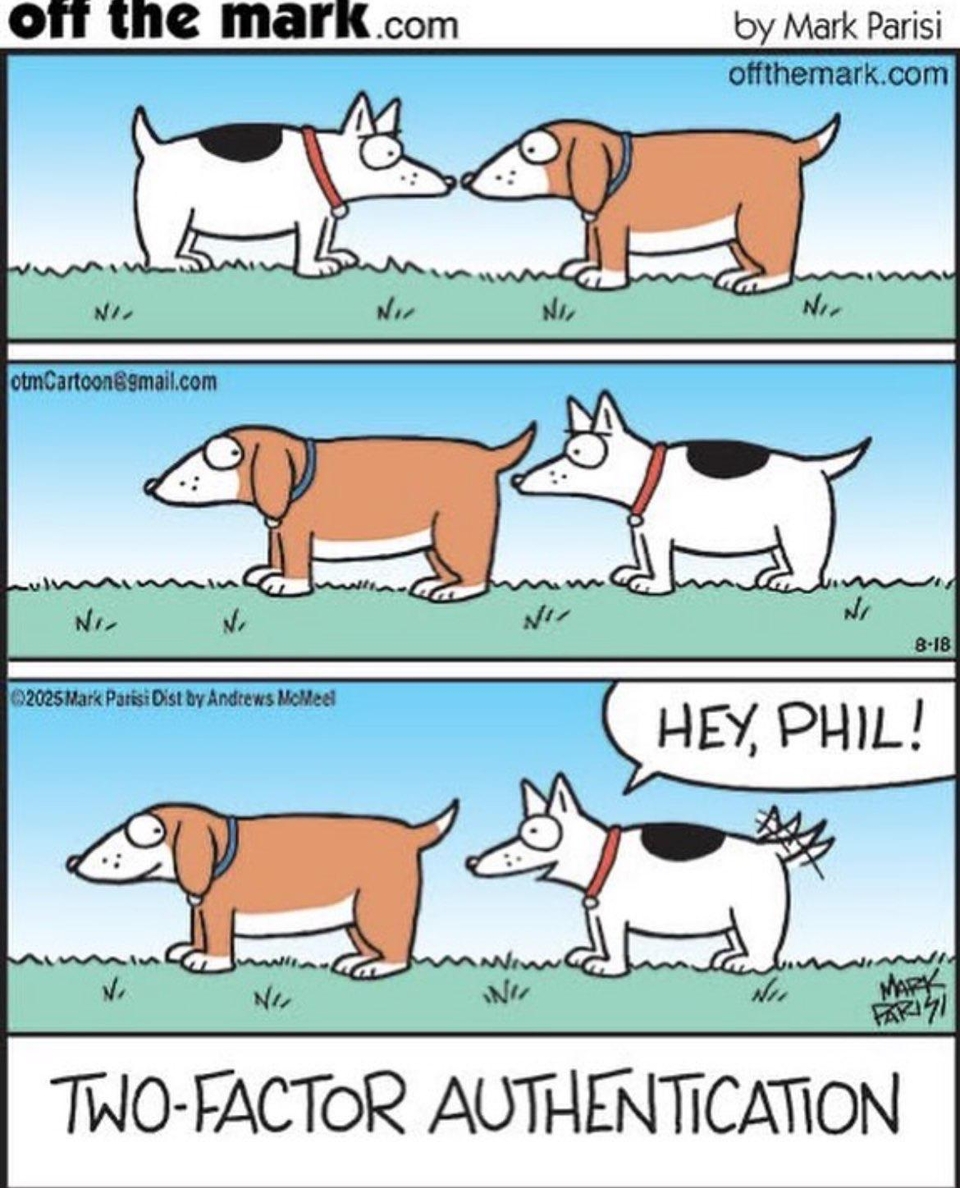
😂 Meme of the week