FAUN.dev's Kubernetes Weekly Newsletter
 🔗 View in your browser. | ✍️ Publish on FAUN.dev | 🦄 Become a sponsor

KubernetesLinks
This Week in Kubernetes, with Kaptain the Shark
🔍 Inside this Issue
Platform teams are growing up while Kubernetes quietly rewires itself for AI—from edge clusters to per-container restarts and thinner base OSes, the ground is shifting under our feet. I pulled the pieces that matter so you can skim, steal, and go deeper where it pays off—details and rabbit holes inside.
🏗️ An introduction to platform engineering
🛰️ CNCF Incubates OpenYurt for Kubernetes at the Edge
🤖 Evolving Kubernetes for generative AI inference
🐧 From Novice to Pro: Mastering Lightweight Linux for Your Kubernetes Project
🛡️ kube-bench Tutorial: Features, Use Cases, How It Works
🕸️ Kubernetes v1.34 brings networking refinements for cloud-native infrastructure
🧠 The architecture of AI is different from all of the computing that came before it
🔁 v1.34: Finer-Grained Control Over Container Restarts
🚀 v1.34: Of Wind & Will (O' WaW)
⚙️ v1.34: User preferences (kuberc) are available for testing in kubectl 1.34
You just leveled up—now borrow boldly and ship with intent.
Have a great week!
FAUN.dev Team
🏗️ An introduction to platform engineering
🛰️ CNCF Incubates OpenYurt for Kubernetes at the Edge
🤖 Evolving Kubernetes for generative AI inference
🐧 From Novice to Pro: Mastering Lightweight Linux for Your Kubernetes Project
🛡️ kube-bench Tutorial: Features, Use Cases, How It Works
🕸️ Kubernetes v1.34 brings networking refinements for cloud-native infrastructure
🧠 The architecture of AI is different from all of the computing that came before it
🔁 v1.34: Finer-Grained Control Over Container Restarts
🚀 v1.34: Of Wind & Will (O' WaW)
⚙️ v1.34: User preferences (kuberc) are available for testing in kubectl 1.34
You just leveled up—now borrow boldly and ship with intent.
Have a great week!
FAUN.dev Team
ℹ️ News, Updates & Announcements
clouddon.ai
At KubeCon + CloudNativeCon Hyderabad 2025, CNCF leads made it clear: cloud-native infra isn’t just supporting AI—it’s becoming its backbone. The conversation’s moved on from “Can Kubernetes run AI?” to “How does it evolve for AI-first everything?”
infoworld.com
Google Cloud, ByteDance, and Red Hat are wiring AI smarts straight into Kubernetes. Think: faster inference benchmarks, smarter LLM-aware routing, and on-the-fly resource juggling—all built to handle GenAI heat.
Their new push, llm-d, bakes vLLM deep into Kubernetes. That unlocks disaggregated serving and cluster-wide KV cache tuning. Translation: serving LLMs just got leaner and meaner.
Big picture: Kubernetes isn't just for microservices anymore. It's turning into an AI-native runtime—purpose-built to wrangle large models at scale.
Their new push, llm-d, bakes vLLM deep into Kubernetes. That unlocks disaggregated serving and cluster-wide KV cache tuning. Translation: serving LLMs just got leaner and meaner.
Big picture: Kubernetes isn't just for microservices anymore. It's turning into an AI-native runtime—purpose-built to wrangle large models at scale.
dqindia.com
AI is breaking open source out of its old habits. Compute-heavy models now demand GPU-first stacks, leaner infrastructure, and fresh rules for how we build and scale.
Jonathan Bryce points out: scalability and reliability still matter—but AI’s deployment needs throw the old architecture playbook out the window.
System shift: AI’s thirst for specialized hardware is reshaping how open source gets written, scaled, and steered.
Jonathan Bryce points out: scalability and reliability still matter—but AI’s deployment needs throw the old architecture playbook out the window.
System shift: AI’s thirst for specialized hardware is reshaping how open source gets written, scaled, and steered.
networkworld.com
Kubernetes 1.34 comes packed with networking upgrades built for scale. Less overhead. Fewer headaches. Easier to run big clusters without sweating packet flows.
This triannual release keeps pushing the envelope for both cloud-native setups and the on-prem diehards.
This triannual release keeps pushing the envelope for both cloud-native setups and the on-prem diehards.
infoq.com
OpenYurt just leveled up—now officially an incubating project under the CNCF. It pushes Kubernetes out past the data center, into the messy edges of the network, without breaking upstream compatibility. No forks, no duct tape.
The maintainer roster’s growing too. Folks from VMware, Microsoft, and Intel are now in the mix, backing features like autonomous edge ops and AI workload support.
System shift: Kubernetes isn't just a cloud story. OpenYurt's and other brilliant projects are making edge-native the new normal.
The maintainer roster’s growing too. Folks from VMware, Microsoft, and Intel are now in the mix, backing features like autonomous edge ops and AI workload support.
System shift: Kubernetes isn't just a cloud story. OpenYurt's and other brilliant projects are making edge-native the new normal.
kubernetes.io
Kubernetes v1.34 drops with 58 updates, and 23 just hit stable. Highlights: Dynamic Resource Allocation (DRA), per-Pod resource limits, and secure image pulls using Pod-specific ServiceAccount tokens.
Scalability gets a lift from streaming list responses. Security tightens with finer anonymous auth rules. Observability picks up DRA health status. Lifecycle management scores container-level restart policies, swap support, and sleep-mode hooks.
System shift: Kubernetes keeps chipping toward precision APIs, smarter scheduling, and modular security stitched into every corner of the control plane.
Scalability gets a lift from streaming list responses. Security tightens with finer anonymous auth rules. Observability picks up DRA health status. Lifecycle management scores container-level restart policies, swap support, and sleep-mode hooks.
System shift: Kubernetes keeps chipping toward precision APIs, smarter scheduling, and modular security stitched into every corner of the control plane.
kubernetes.io
Kubernetes 1.34 ships an alpha feature for per-container restart policies. Now containers can break free from the Pod-wide rulebook and decide when (or if) to restart—based on their own exit codes.
Use cases? Think ML jobs that fail solo and don’t need to drag the whole Pod down. Or init containers that should stay dead when they’re done.
System shift: Splitting container lifecycles from Pod lifecycles makes fault tolerance smarter and recovery faster.
Use cases? Think ML jobs that fail solo and don’t need to drag the whole Pod down. Or init containers that should stay dead when they’re done.
System shift: Splitting container lifecycles from Pod lifecycles makes fault tolerance smarter and recovery faster.
kubernetes.io
Kubernetes v1.34 pushes kubectl into the future with a beta user preferences system. Drop a .kuberc file in place, and you can bake in default flags, toggle features like interactive delete or Server-Side Apply, and wire up custom aliases—including pre- and post-args.
🔗 Stories, Tutorials & Articles
linuxjournal.com
Alpine, Flatcar, Fedora CoreOS, Talos, and Ubuntu Core are carving out strong niches as Kubernetes-first base OSes. Each leans into immutability, container-native design, and just enough system overhead to get out of the way.
That lean profile isn’t just a flex—it means lower resource drag and a development setup that mirrors production more closely. Ideal when spinning up local k3s or MicroK8s without lugging around full-fat Linux.
System shift: General-purpose Linux is getting benched in favor of purpose-built OSes. For local clusters and fast pipelines, the new default is thin, locked-down, and born for containers.
That lean profile isn’t just a flex—it means lower resource drag and a development setup that mirrors production more closely. Ideal when spinning up local k3s or MicroK8s without lugging around full-fat Linux.
System shift: General-purpose Linux is getting benched in favor of purpose-built OSes. For local clusters and fast pipelines, the new default is thin, locked-down, and born for containers.
hackernoon.com
A full-stack engineer and systems architect with hands-on time in cloud and IoT, building real-world tools for the oil and gas sector. Think connected rigs, smart pipelines, and infrastructure that doesn’t flinch at scale.
Market signal: Industrial tech’s going deep. Cloud and IoT aren’t side projects anymore—they’re the backbone. Expect steady demand for folks who know how to wire up the verticals.
Market signal: Industrial tech’s going deep. Cloud and IoT aren’t side projects anymore—they’re the backbone. Expect steady demand for folks who know how to wire up the verticals.
computerweekly.com
Platform engineering is stepping in where DevOps didn’t quite land. Think fewer duct-taped pipelines, more thoughtful systems. The fix? Internal Developer Platforms (IDPs), usually riding on Kubernetes, built to tame the sprawl.
Gartner says 80% of big engineering orgs will run platform teams by 2026. Next-gen IDPs won’t just serve up infra—they’ll read your intent and automate delivery flows like AI-native copilots with actual context.
Gartner says 80% of big engineering orgs will run platform teams by 2026. Next-gen IDPs won’t just serve up infra—they’ll read your intent and automate delivery flows like AI-native copilots with actual context.
wiz.io
kube-bench just leveled up. Aqua Security’s CIS compliance scanner now snaps into CI/CD, runs pre-deploy checks, and helps dig through forensics after incidents.
It plays nice with managed K8s—EKS, AKS, GKE—and handles custom YAML test suites if you’re going off the beaten path. Reports land in structured formats, ready for dashboards or SIEMs.
It plays nice with managed K8s—EKS, AKS, GKE—and handles custom YAML test suites if you’re going off the beaten path. Reports land in structured formats, ready for dashboards or SIEMs.
🛍️ Swag, Deals, And Offers
bytevibe.co
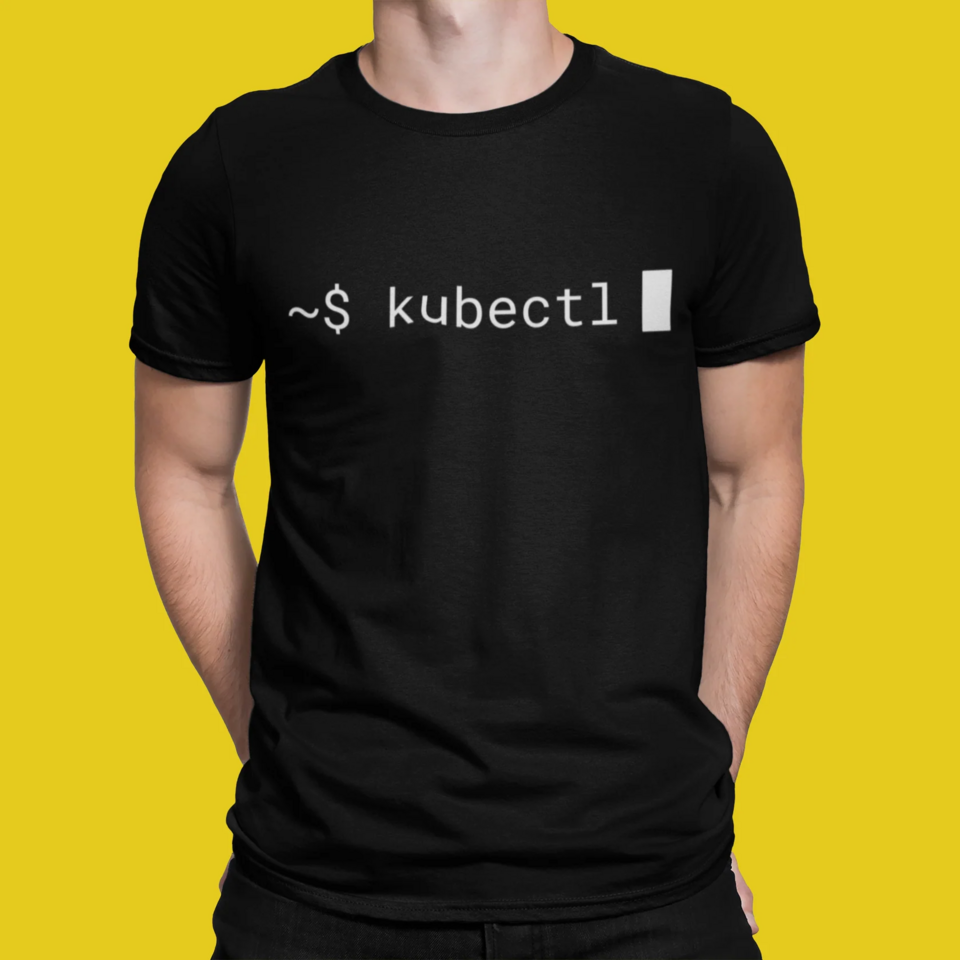
Bold. Minimal. Just one word: kubectl. Wear the command that runs your clusters. Perfect for DevOps, SREs, and cloud natives.
Get yours now.
Get yours now.
⚙️ Tools, Apps & Software
github.com
Collection of Docker images with headless VNC environments
🤔 Did you know?
Did you know that Kubernetes pods use options ndots:5 by default in /etc/resolv.conf, meaning names with fewer than five dots trigger search-domain expansion (typically across three cluster domains) before trying the absolute name? This can increase DNS query latency for external lookups, which is why many operators lower ndots (e.g. to 2) or deploy NodeLocal DNSCache to reduce tail-latency and query load. Adding a trailing dot (e.g. api.example.com.) forces a fully qualified lookup, bypassing the search path entirely.
🤖 Once, SenseiOne Said
"Containers standardized delivery; Kubernetes standardized the ways distributed systems fail. Declarative state is comforting until a partition turns 'eventual consistency' into just 'eventual.' The control plane automates recovery—and surprises."
— SenseiOne
— SenseiOne
😂 Meme of the week