FAUN.dev's Kubernetes Weekly Newsletter
 🔗 View in your browser. | ✍️ Publish on FAUN.dev | 🦄 Become a sponsor

KubernetesLinks
This Week in Kubernetes, with Kaptain the Shark
📝 A Few Words
Kubernetes everywhere—on phones, in GUIs, even in existential crises. From DIY clusters and JobSets to AWS’s newest orchestration experiment, this issue’s bursting with grit, glitches, and just enough swagger to keep you curious. ⚙️🐢
🧩 CNPG Recipe 17: PostgreSQL major upgrades, no drama
🧪 Uber’s Journey to Ray on Kubernetes
📱 Recycling a OnePlus 6T into a Kubernetes node
🧠 Introducing kro: Kube Resource Orchestrator from AWS
🖥️ Headlamp GUI for Kubernetes: CNCF’s latest move
🧼 How we moved to Kubernetes (and tamed memory, too)
🪛 Production-ready Kubernetes Checklist
🌀 Running WasmEdge containers without a runtime
📦 Build your own LMS with Kompose + Canvas LMS
🧵 Mastering JobSet and GKE rollup metrics
💡 Stay sharp. It’s all signal, no noise.
🧩 CNPG Recipe 17: PostgreSQL major upgrades, no drama
🧪 Uber’s Journey to Ray on Kubernetes
📱 Recycling a OnePlus 6T into a Kubernetes node
🧠 Introducing kro: Kube Resource Orchestrator from AWS
🖥️ Headlamp GUI for Kubernetes: CNCF’s latest move
🧼 How we moved to Kubernetes (and tamed memory, too)
🪛 Production-ready Kubernetes Checklist
🌀 Running WasmEdge containers without a runtime
📦 Build your own LMS with Kompose + Canvas LMS
🧵 Mastering JobSet and GKE rollup metrics
💡 Stay sharp. It’s all signal, no noise.
⭐ Patrons
www.manageengine.com
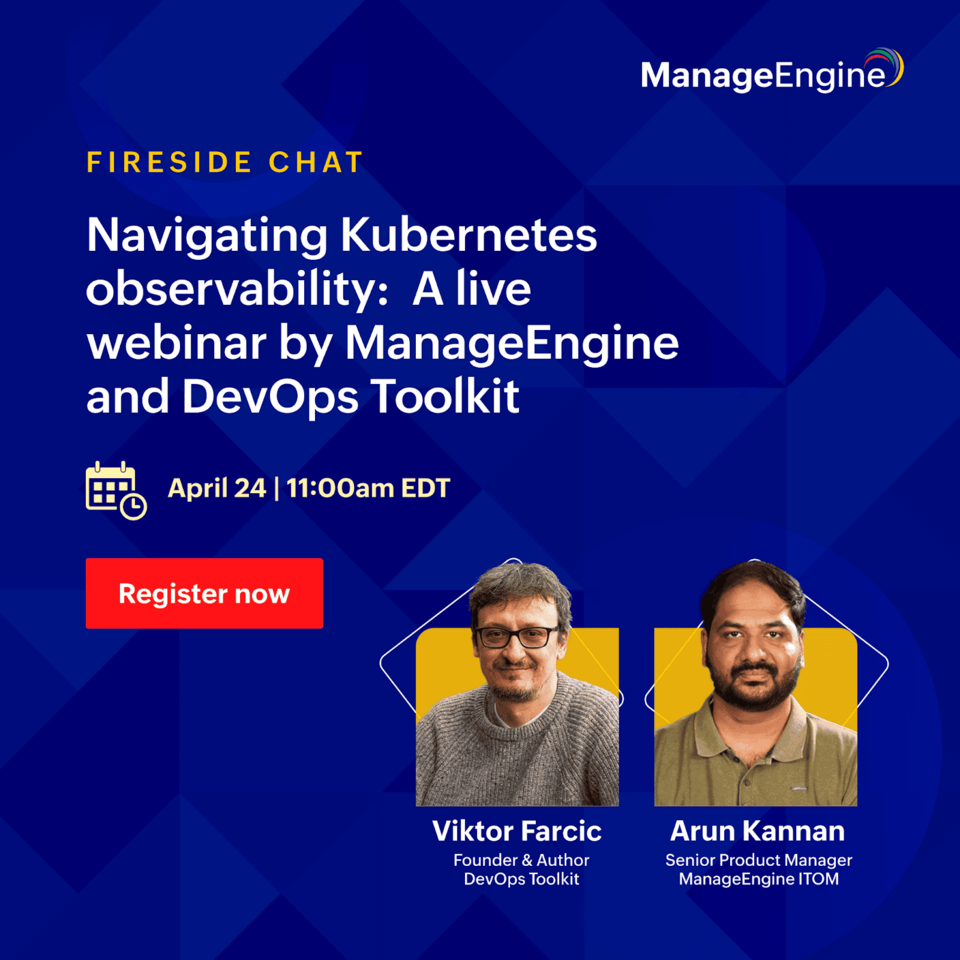
Struggling with Kubernetes visibility? Join ManageEngine and DevOps expert Viktor Farcic in this exclusive webinar to uncover strategies for enhancing performance, eliminating blind spots, and optimizing your Kubernetes environment. Register now !
ℹ️ News, Updates & Announcements
cloudnativenow.com
Microsoft's Headlamp—now part of the CNCF family—wants to shred Kubernetes' intimidating reputation. Think Windows, but for clusters. Their plan? Hook 10 million fresh recruits with their slick GUI. Here's the kicker: 61% of workloads already bow to Kubernetes, and AI/ML workloads rule 56% of them. Who knows? Next-gen AI agents might just crush the old-school UI approach to cluster management.
www.gabrielebartolini.it
CloudNativePG 1.26 storms the scene, making PostgreSQL upgrades a breeze inside Kubernetes. It slashes the usual chaos. Minimal downtime threatens, but what's life without a little thrill?

aws.amazon.com
The Kube Resource Orchestrator (kro) dreams big by letting you turn complex Kubernetes APIs into elegant, single ResourceGroup CRDs. Think of it as Kubernetes without the migraines—dependencies and configurations quietly managed in the background. An AWS experiment still cooking, it's not quite ready for the big leagues just yet. But it does shift the dev focus back where it belongs: on crafting killer apps, not wrestling custom controllers.
🔗 Stories, Tutorials & Articles
uber.com
Uber enhanced its machine learning platform by migrating workloads to Kubernetes in early 2024. The migration aimed to solve pain points such as manual resource management, inefficient resource utilization, and inflexible capacity planning. The architecture designed included federated resource management featuring a global control plane, cluster management, job execution, monitoring, job routing based on organizational hierarchies, and error handling to ensure a reliable experience for users.
thenewstack.io
Google has hatched a cunning plan: turn Kubernetes into the go-to choice for AI/ML workloads. It’s outgrowing its “just for containers” phase. In the AI explosion, everyone suddenly wants Kubernetes—who knew? To stay ahead, Google’s jazzing up its cloud offerings with slicker performance, scalability that stretches like taffy, and price tags that don’t gnaw at the wallet.
medium.com
Kubernetes just dropped a bombshell: JobSet. Managing tangled batch workloads? Now it's all a numbers game for the pros. Think of it as a maestro marshaling a wild orchestra of Jobs into harmony. But wait, there's more. From GKE 1.32.1 onward, they’ve slipped in automatic rollup metrics. No extra fees attached. Ideal for HPC and machine learning crunching on GPU/TPU. Optimize the chaos without breaking the bank.
gabrielsimmer.com
Connected a 7-year-old OnePlus 6T as a Kubernetes node in my homelab—tagged on "8" cores, 6GB RAM—but postmarketOS kernel didn’t have nftables' numgen! Wrestled with manual kernel compilation and untangled DNS snafus, but now the project's chugging along mighty fine.
hackernoon.com
WasmEdge doesn't just compete with old-school OCI runtimes—it obliterates them with lightning-fast startups. It takes a chainsaw to resource waste and security headaches, thanks to its ironclad sandboxing. Its cross-platform magic dances across x86, ARM, and RISC-V with zero configuration drama. A dream come true for edge and serverless apps craving raw speed and nimble portability.
itnext.io
Choreo by WSO2 dreams big, plotting to eclipse Kubernetes. It's not just any platform; it's an enterprise-grade Internal Developer Platform wrapped in an elegant UI. Think of it as a tech ballerina effortlessly twirling around more than 20 CNCF tools. The goal? Make code deployment child's play while banishing infrastructure headaches into oblivion.
Choreo takes aim at Heroku with surgical precision. It doesn't just promise simplicity—it promises Kubernetes-level control and stacks of enterprise compliance. Automated security watches every corner, ensuring peace of mind. For developers craving both ease and might, Choreo stands as a tempting, open-source contender.
Choreo takes aim at Heroku with surgical precision. It doesn't just promise simplicity—it promises Kubernetes-level control and stacks of enterprise compliance. Automated security watches every corner, ensuring peace of mind. For developers craving both ease and might, Choreo stands as a tempting, open-source contender.
hackernoon.com
Canvas LMS + Kubernetes: Deploy Kompose to morph Docker configs into sleek Kubernetes resources. Dive deep into LTI 1.3's superior integration. Instructure's hosted instances miss out on this magic trick. Self-host to unlock the full experience.
medium.com
A glitch in the autoscaling settings skewed the NEGs, cramming them into a single AZ. Boom. Next thing you know, pods flounder and the app goes belly-up.
www.infoq.com
Automated tests crush infrastructure anxiety. Use tools like Terratest to deploy, validate, and clean up—all without a stealth deployment.
vegard.blog.engen.priv.no
BGP setup needs an autonomous system. For iBGP, keep the AS consistent across peers. Go wild with private numbers like 64512 for your internal playground. Unifi runs FRR for routing, but don’t expect shiny graphics. You're stuck with config uploads. Old-school control freaks might secretly rejoice.
dzone.com
Running Kubernetes in production isn’t just a button-click. Start with 3 master nodes to dodge disasters. Dish out load balancing to smash single points of failure. Skew your node sizing for peak workload muscle.
Automate scaling with Cluster Autoscaler—your new best friend. Keep your setup a fortress with RBAC, encryption, and a fortress-like network.
Pod Priority and Resource Quotas? They’re the referees for resource brawls. Good thing, too.
Every app naps a little better with solid health checks and auto-healing. Keep the uptime meter ticking. Snapshots and multi-region clusters are your insurance policy for chaos. They make sure your setup laughs in disaster’s face.
Automate scaling with Cluster Autoscaler—your new best friend. Keep your setup a fortress with RBAC, encryption, and a fortress-like network.
Pod Priority and Resource Quotas? They’re the referees for resource brawls. Good thing, too.
Every app naps a little better with solid health checks and auto-healing. Keep the uptime meter ticking. Snapshots and multi-region clusters are your insurance policy for chaos. They make sure your setup laughs in disaster’s face.
radekmie.dev
Migrating from AWS ECS to AWS EKS? Beats the bark out of those pesky spot instance disruptions, but introduces a new player: the complexity monster named Kubernetes. Bigger, faster, cheaper—if you know the dance steps.
Juggling CPUs in Kubernetes feels like herding caffeinated cats. Enter Karpenter to save on costs by cherry-picking instances—though it turns out not all CPUs play nice. Unforeseen headaches like restrictive firewall settings and iffy instance type choices took a swing at them, loudly reminding everyone that planning transitions is a must.
Deploying Actions Runner Controller on Kubernetes made CI/CD roll in under budget. And switching to jemalloc axe-murdered memory use by 20%, freeing resources during sleepy traffic hours.
Juggling CPUs in Kubernetes feels like herding caffeinated cats. Enter Karpenter to save on costs by cherry-picking instances—though it turns out not all CPUs play nice. Unforeseen headaches like restrictive firewall settings and iffy instance type choices took a swing at them, loudly reminding everyone that planning transitions is a must.
Deploying Actions Runner Controller on Kubernetes made CI/CD roll in under budget. And switching to jemalloc axe-murdered memory use by 20%, freeing resources during sleepy traffic hours.
⚙️ Tools, Apps & Software
github.com
An opinionated GoLang framework for accelerated microservice development. Built in support for databases and observability.
github.com
A service to keep container images up-to-date. Made for Kubernetes and Docker.
github.com
Notify ArgoCD Application status via Pull Request comment or Deployment API
🤔 Did you know?
Did you know that Netflix uses a custom-built tool called Spinnaker for continuous delivery? Originally developed in-house and later open-sourced, Spinnaker helps Netflix deploy code thousands of times per day across its global infrastructure. It supports multi-cloud environments, enabling seamless rollouts on AWS, Google Cloud, and more. One of its key features is automated canary analysis, which deploys new code to a small subset of users and monitors for issues before a full rollout—helping Netflix ship faster while keeping their 200+ million users streaming smoothly.
🗣️ Quote of the week
“If you can’t describe what you are doing as a process, then you don’t know what you are doing.” ― Clayton M. Christensen, Competing Against Luck: The Story of Innovation and Customer Choice
😂 Meme of the week