FAUN.dev's AI/ML Weekly Newsletter
 🔗 View in your browser | ✍️ Publish on FAUN.dev | 🦄 Become a sponsor

Kala
#ArtificialIntelligence #MachineLearning #MLOps
🔍 Inside this Issue
Open models might never catch up, yet they could still set the agenda, while agent swarms ship code and a wall plotter turns prompts into ink. If that tension resonates, the links below map the space with real builds and hard-won lessons.
🎨 Generative Pen-trained Transformer
🧭 My AI Adoption Journey
🧩 Nathan Lambert: Open Models Will Never Catch Up
🏈 Self-Optimizing Football Chatbot
⚙️ This Is the First AI That Helped Build Itself - Meet GPT-5.3-Codex
🚗 Towards self-driving codebases
Ship smarter this week.
Take care!
FAUN.dev() Team
🎨 Generative Pen-trained Transformer
🧭 My AI Adoption Journey
🧩 Nathan Lambert: Open Models Will Never Catch Up
🏈 Self-Optimizing Football Chatbot
⚙️ This Is the First AI That Helped Build Itself - Meet GPT-5.3-Codex
🚗 Towards self-driving codebases
Ship smarter this week.
Take care!
FAUN.dev() Team
⭐ Patrons
faun.dev
Most of us spend our time learning tools, frameworks, and patterns that sit several layers above the real system. That works until something changes. Then the gaps show up fast.
FAUN.sensei() is about closing those gaps. In addition to tools and technologies, the courses focus on fundamentals, mental models, and how systems actually behave underneath the abstractions.
If you've been meaning to step back and strengthen your foundations, February is a good moment to do it. Use the code SenseiFebruary to get 20% off all my courses throughout February.
FAUN.sensei() is about closing those gaps. In addition to tools and technologies, the courses focus on fundamentals, mental models, and how systems actually behave underneath the abstractions.
If you've been meaning to step back and strengthen your foundations, February is a good moment to do it. Use the code SenseiFebruary to get 20% off all my courses throughout February.

ℹ️ News, Updates & Announcements
faun.dev
OpenAI's GPT-5.3-Codex levels up. Think 25% faster runtimes, sharper reasoning, and more reach - across terminals, IDEs, and browsers. It tackles the full dev loop: debugging, deployments, PRD writing. Even lets users steer output in real time.
It crushes benchmarks like SWE-Bench Pro, Terminal-Bench, and OSWorld. And it’s the first Codex model tagged “High capability” for cybersecurity. Big deal.
It crushes benchmarks like SWE-Bench Pro, Terminal-Bench, and OSWorld. And it’s the first Codex model tagged “High capability” for cybersecurity. Big deal.
🔗 Stories, Tutorials & Articles
cursor.com
OpenAI spun up a swarm of GPT-5.x agents - thousands of them. Over a week-long sprint, they cranked out runnable browser code and shipped it nonstop. The system hit 1,000 commits an hour across 10 million tool calls.
The architecture? A planner-worker stack. Hierarchical. Recursive. Lean on agent chatter. Heavy on self-steering behavior.
The architecture? A planner-worker stack. Hierarchical. Recursive. Lean on agent chatter. Heavy on self-steering behavior.
theodore.netprojects
Meet GPenT, an open-source, wall-mounted polargraph pen plotter with a flair for generative art. It blends custom hardware, Marlin firmware, a Flask web UI running on Raspberry Pi, and Gemini-generated drawing prompts.
The stack? Machina + LLM. Prompts go in, JSON drawing commands come out. That drives a real-world plotter that spits out SVGs and algorithmic patterns like it’s no big deal.
The stack? Machina + LLM. Prompts go in, JSON drawing commands come out. That drives a real-world plotter that spits out SVGs and algorithmic patterns like it’s no big deal.
turingpost.com
Open models will be the engine for the next ten years of AI research, according to Nathan Lambert, a research scientist at AI2. He explains that while open models may not catch up with closed ones due to fewer resources, they are still crucial for innovation. Lambert emphasizes the importance of intentional investment in open models to maintain influence in the AI research field.
databricks.com
Generic LLM judges and static prompts fail to capture domain-specific nuance in football defensive analysis. The architecture for self-optimizing agents built on Databricks Agent Framework allows developers to continuously improve AI quality using MLflow and expert feedback. The agent, such as a DC Assistant for American Football, can interact with users via Databricks Apps, creating a tool-calling agent for specific domain expertise. The build phase creates an initial prototype, while the optimize phase accelerates to production by continuously optimizing the agent based on feedback.
mitchellh.com
A dev walks through the shift from chatbot coding to agent-based AI workflows, think agents that read files, run code, and double-check their work. Things only clicked once they built out custom tools and configs to help agents spot and fix their own screwups. That’s the real unlock.
⚙️ Tools, Apps & Software
github.com
A native desktop GUI for Claude Code — chat, code, and manage projects visually. Built with Electron + Next.js.
github.com
A Claude Code plugin that automatically captures everything Claude does during your coding sessions, compresses it with AI (using Claude's agent-sdk), and injects relevant context back into future sessions.
🤔 Did you know?
Did you know that QLoRA lets you fine-tune a 65 billion-parameter LLaMA model on a single 48 GB GPU by combining 4-bit quantization with Low-Rank Adapters (LoRA)? QLoRA uses a 4-bit NormalFloat (NF4) format designed for normally distributed weights, then applies double quantization to shrink the quantization constants themselves - so you get near full FP16 accuracy with about a 4× reduction in VRAM usage. It also uses paged optimizers that move optimizer state between GPU VRAM and CPU memory to avoid out-of-memory spikes, enabling stable training without extra GPUs.
🤖 Once, SenseiOne Said
"CI for ML tries to pin a moving target; if it works too well, you stopped learning. Automation moves errors from code to configuration, and ML moves them from configuration to data."
SenseiOne
SenseiOne
⚡Growth Notes
Resist building "just enough" evaluation for your models; instead, treat your eval harness as a first-class product artifact with versioned datasets, locked prompts, and reproducible runs, even if it slows you down for a week. The real cost only surfaces a year later when nobody can trust an offline win, people start A/B testing everything in production, and your infrastructure budget quietly becomes the most accurate measure of model quality.
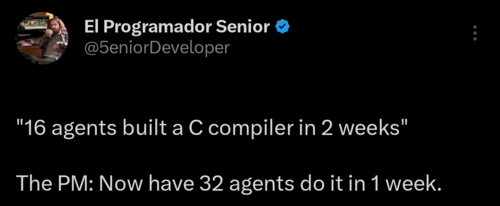
😂 Meme of the week