FAUN.dev's AI/ML Weekly Newsletter
 🔗 View in your browser | ✍️ Publish on FAUN.dev | 🦄 Become a sponsor

AILinks
This week in Generative AI/ML, with Kala the Koala
📝 A Few Words
The arms race between tech giants just got hotter. Google’s Sec-Gemini v1 slices through cyber threats like butter, Microsoft’s CUAs are operating computers like humans, and Llama 4 is doing deep work without breaking a sweat. Meanwhile, Anthropic’s peeking into AI brains—and catching them in the act. 👀
🛡️ Google announces Sec-Gemini v1, a new experimental cybersecurity model
🐪 Introducing the Llama 4 herd in Azure AI Foundry and Azure Databricks
🤖 Computer Use Agents (CUAs) for Enhanced Automation
🎭 Agent2Agent Protocol (A2A) — Google’s inter-agent playground
🧠 Anthropic scientists expose how AI actually ‘thinks’
🚀 Microsoft Copilot in Azureis now generally available
🛍️ Amazon's new AI agent will shop third-party sites for you
🔎 Claude 3.7 Sonnet vs ChatGPT 4o: A Hands-On Comparison
🧠 Multi-Token Attention: Going Beyond Single-Token Focus in Transformers
🏗️ Benchmarking a 65,000-node GKE cluster with AI workloads
💡 It’s a full-stack future—read, reflect, and build better.
🛡️ Google announces Sec-Gemini v1, a new experimental cybersecurity model
🐪 Introducing the Llama 4 herd in Azure AI Foundry and Azure Databricks
🤖 Computer Use Agents (CUAs) for Enhanced Automation
🎭 Agent2Agent Protocol (A2A) — Google’s inter-agent playground
🧠 Anthropic scientists expose how AI actually ‘thinks’
🚀 Microsoft Copilot in Azureis now generally available
🛍️ Amazon's new AI agent will shop third-party sites for you
🔎 Claude 3.7 Sonnet vs ChatGPT 4o: A Hands-On Comparison
🧠 Multi-Token Attention: Going Beyond Single-Token Focus in Transformers
🏗️ Benchmarking a 65,000-node GKE cluster with AI workloads
💡 It’s a full-stack future—read, reflect, and build better.
ℹ️ News, Updates & Announcements
venturebeat.com
Anthropic develops new method to peer inside large language models like Claude, revealing advanced capabilities and internal processes. The research demonstrates models plan ahead, use similar blueprint for interpreting ideas across languages, and sometimes work backward from desired outcome. The approach, inspired by neuroscience techniques, could help identify safety issues in models.
techcommunity.microsoft.com
Copilot in Azure reaches general availability, chopping response times by 30% and saving over 30,000 developer hours a month. Now free with a rock-solid >99.9% uptime. Tuned up for accessibility, real-time AI chat, and Terraform support—all with a keen eye on responsible AI and localization! 🚀
techcommunity.microsoft.com
Azure OpenAI Service's Responses API has rolled out the Computer Use Agent (CUA)—an AI that actually uses a computer like a human, and no, you're not dreaming. These CUAs harness multimodal vision and AI frameworks to navigate tasks with nimble reasoning. Forget your one-trick-pony RPAs; these guys break free of rigid scripts. Sure, they're no speed demons compared to APIs for niche tasks, but who’s counting milliseconds when you’ve got adaptability?
techcrunch.com
Amazon's "Buy for Me" AI turns shopping into an adventure. Explore the wilds beyond Amazon without ever abandoning the app. This tech genie, conjured by Amazon Nova and Anthropic's Claude, brings a few trust demons along for the ride.
azure.microsoft.com
Llama 4 Scout on Azure AI Foundry doesn’t just sit around; it dives into its massive 10 million token context like it's born for deep dives and endless document wrangling. Meanwhile, Llama 4 Maverick takes multilingual, multimodal chat conversations where few dare to go. Its Mixture of Experts architecture flexes some serious muscle, scaling like a champ while keeping the CFO happy.
security.googleblog.com
Sec-Gemini v1 steamrolls cybersecurity benchmarks, leaving rivals eating digital dust. It’s 11% better on CTI-MCQ and 10.5% sharper on CTI-Root Cause Mapping, thanks to cutting-edge threat intelligence and vulnerability insights. With a little help from Google Threat Intelligence and OSV, it decodes complex vulnerabilities faster than you can say "firewall." Cybersecurity pros: get ready to outpace those cyber gremlins.
developers.googleblog.com
A2A Protocol tosses AI agents from different vendors into a communal sandbox. Over 50 tech behemoths like Google, Salesforce, and PayPal rally behind it. Here, silos crumble. Built on solid tech standards, it lets agents dance through vibrant, multi-agent workflows. Think of it as a revolutionary leap into automated enterprise ballet—real-time chat, diverse modalities, and seamless choreography.
🐾 From FAUNers
faun.pub
Multi-Token Attention (MTA) shakes up the usual token-by-token gig of transformers. Instead, it eyeballs multiple tokens at once. Say goodbye to the "Alice and rabbit" gaffe—now models can notice token patterns in their native habitat, not just lone tokens. Long-context perception and multi-hop reasoning? MTA nails them. Most impressively, it sidesteps model bloat with its slick convolutional mojo. Minor computational grunt work sneaks in, but the benefits roar.
🔗 Stories, Tutorials & Articles
www.engraved.blog
ChatGPT moonlights as a virtual Linux machine, performing calculations faster than some actual hardware. Impressive, right? But don't get too excited—it can't juggle real-time tasks or tap into a GPU. A digital superhero with a glaring Achilles' heel.
www.thealgorithmicbridge.com
Google's Gemini 2.5 Pro bulldozes through benchmarks like LMArena and GPQA Diamond. With its gargantuan 1 million token context window and zero-cost access, it leaves OpenAI eating its dust. Google’s sprawling ecosystem welcomes Gemini with open arms. They're not just ruling AI text models; they command music, image, and video AI. Their victory lap makes OpenAI's 500 million active users shrink into irrelevance.
greyneuronsconsulting.com
Claude 3.7 Sonnet nailed it, dazzling with primo JavaScript, killer charts, and slick CSS. ChatGPT? A tad sluggish. It needed a tune-up and some shine. But toss in Cline with Claude? Boom—instant mystery infusion. Yet, the real showstopper? Claude's knack for spewing out rock-solid, deploy-ready code. Pure magic.
build5nines.com
Ever tried wrangling YouTube transcripts with Python? Do it. Then crank your Generative AI’s IQ by tossing those transcripts straight into LLMs. Voilà—you’ve got a brainier machine, serving up insight like a pro.
cloud.google.com
GKE’s now flexes with a colossal 65,000-node cluster—a boon for AI workloads that feast on mega infrastructure. Building on their 50,000+ TPU cluster saga, GKE tackles AI workload quirks like resource juggling and node chatter. In CPU stress tests, they whipped up 65,000 StatefulSet Pods, flaunting speedy scheduling even when pinched. Image pull tweaks cut startup drag from 12 minutes to a neat 2.5.
www.theregister.com
Look sharp! LLM-driven tools are fabricating package names out of thin air. In commercial models, it's 5.2%. For open models, a staggering 21.7%. Ideal for those up to no good and into "slopsquatting."
www.zdnet.com
ChatGPT Plus aces coding tests. Meanwhile, Microsoft's Copilot and Meta AI trip over their virtual feet. These AIs can patch bugs like pros, but crafting full-fledged apps? Not in their current skill set.
exostellar.io
NVIDIA's KAI Scheduler and Exostellar's SDG showcase the nerd ballet of fractional GPU scheduling. KAI slices GPU time like a master chef carving a roast, yet can't keep its focus solo—leading to app skirmishes. In contrast, Exostellar SDG nails resource control, quarantines workloads like a germaphobe, and mingles with various GPUs. It even sports vLLM dual deployments without breaking a sweat.
💬 Discussions, Q&A & Forums
⚙️ Tools, Apps & Software
github.com
KAI Scheduler is an open source Kubernetes Native scheduler for AI workloads at large scale
github.com
A high-performance distributed file system designed to address the challenges of AI training and inference workloads.
github.com
Model Context Protocol (MCP) server for Kubernetes and OpenShift
🤔 Did you know?
Did you know that Google Docs allows multiple people to edit a document in real time thanks to an algorithm called Operational Transformation (OT)? OT ensures that even if two users type or edit the same paragraph at the same time, the changes merge smoothly without conflicts or data loss. Originally developed for collaborative systems like Google Wave, this algorithm is the magic behind the seamless, live collaboration we now take for granted in tools like Google Docs, Sheets, and Slides.
🗣️ Quote of the week
“You Can't Write Perfect Software. Did that hurt? It shouldn't. Accept it as an axiom of life. Embrace it. Celebrate it. Because perfect software doesn't exist. No one in the brief history of computing has ever written a piece of perfect software. It's unlikely that you'll be the first. And unless you accept this as a fact, you'll end up wasting time and energy chasing an impossible dream.” ― Andrew Hunt, The Pragmatic Programmer: From Journeyman to Master
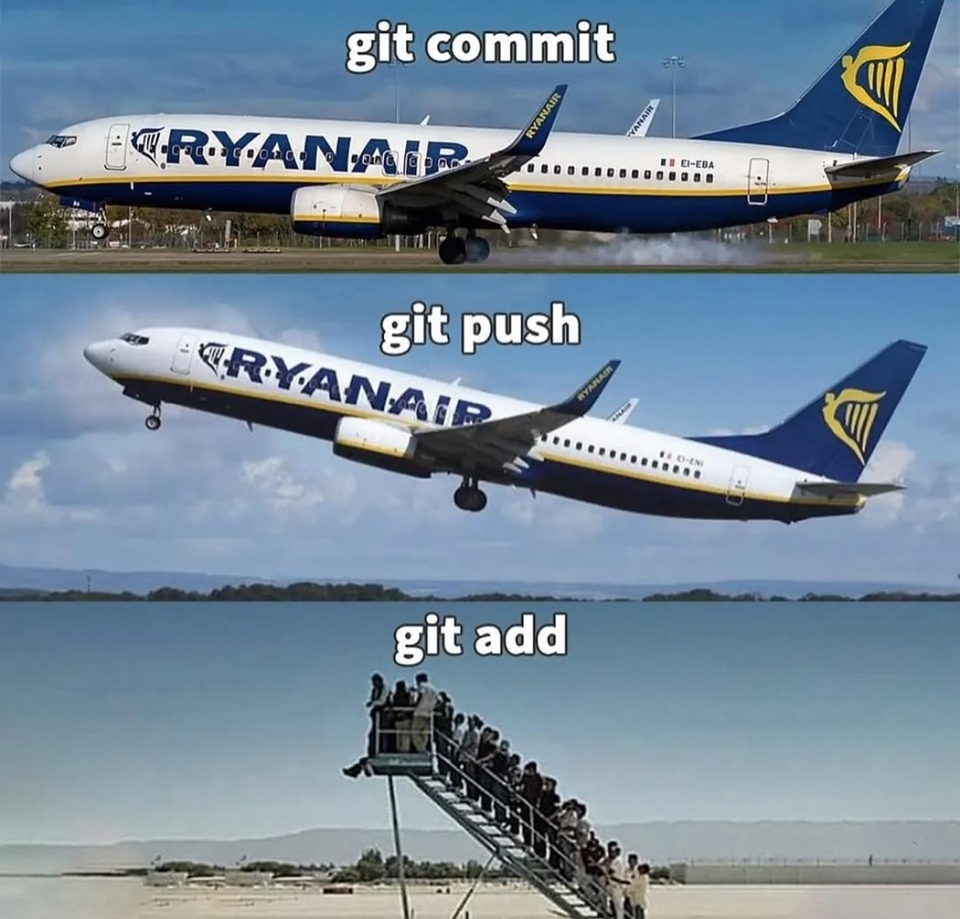
😂 Meme of the week