FAUN.dev's DevOps / SRE / Platform Engineering Weekly Newsletter
 🔗 View in your browser. | ✍️ Publish on FAUN.dev | 🦄 Become a sponsor

DevOpsLinks
This week in DevOps, with Dolly the Cow
📝 A Few Words
A wild mix this week: Debian questions AI ethics, AWS accidentally builds a security hole, and senior devs admit they still Google basic syntax (because brains aren't hard drives). Meanwhile, SREs are handing off their fire extinguishers to LLMs, and DeepSeek’s filesystem might be too fast for its own good. Let's dig in.
🧠 Debian Developers debate whether AI models violate open-source ethics
🔐 AWS security tool ironically introduces privilege risk
📈 SFTP vs. FTPS benchmarks: small files vs. big downloads
🧪 LLMs for SREs: scaling without burnout
💻 Why senior devs Google syntax (and why that’s a feature, not a bug)
☁️ New GCP privilege escalation via IAM tagBindings
🔍 Kubernetes threats & trends from Microsoft
🧰 Top 5 Git Tips you’ll actually use
🧪 Anatomy of a Postgres operation, explained with Peppa Pig 🐷
🔍 Docker base images demystified: Alpine, Distroless, and best practices
Smart minds debug faster. Keep learning, keep questioning.
🧠 Debian Developers debate whether AI models violate open-source ethics
🔐 AWS security tool ironically introduces privilege risk
📈 SFTP vs. FTPS benchmarks: small files vs. big downloads
🧪 LLMs for SREs: scaling without burnout
💻 Why senior devs Google syntax (and why that’s a feature, not a bug)
☁️ New GCP privilege escalation via IAM tagBindings
🔍 Kubernetes threats & trends from Microsoft
🧰 Top 5 Git Tips you’ll actually use
🧪 Anatomy of a Postgres operation, explained with Peppa Pig 🐷
🔍 Docker base images demystified: Alpine, Distroless, and best practices
Smart minds debug faster. Keep learning, keep questioning.
⭐ Patrons
bytevibe.co
Fuel your coding sessions with the Kubernetes Mug — a sleek, durable 11oz ceramic essential for any developer or DevOps pro. Dishwasher and microwave safe with a sharp, double-sided design, it’s the perfect blend of style and function.
✔️ Ships fast.
♥️ Built to last.
✔️ Ships fast.
♥️ Built to last.

faun.dev
Are you building cool stuff in DevOps, AI, or Kubernetes? Publish on FAUN.dev and get your content in front of thousands of developers and engineers.
📢 Write and get discovered!
👉 Start posting here.
📢 Write and get discovered!
👉 Start posting here.

ℹ️ News, Updates & Announcements
www.phoronix.com
Debian's plotting a General Resolution to untangle the knotty question: Do AI models, birthed from open-source code yet fed on a diet of non-free data, jibe with their high-minded free software ethos?
github.blog
Reviewers unlock a new superpower: commenting on push protection requests. Adds clarity. Offers context. Secret scanning just got a little less cryptic.
🐾 From FAUNers
faun.pub
Senior devs wield a mighty skill: problem-solving. They don't just hoard library knowledge like a digital hoarder. Instead, they've mastered how to learn—because brains are for thinking, not storage.
faun.dev
"git commit --amend": Because sometimes you need a do-over. It revises your last commit, sprucing up history without leaving awkward trails. "git add -p" is your precision tool—stage code snippets like a gourmet chef, avoiding those bottomless pit commits. "git reset" takes you back to calmer seas. Use --soft to keep changes in the queue, or --hard to wipe the slate clean, no regrets. Merge madness averted with "--base"; it reveals context like a seasoned detective, helping you make smarter calls. Oh, and Git's autocorrect? Keeps your typos from running the show, course-correcting to the nearest command unless you hit the brakes.
faun.pub
Ansible's push-based model turns configurations on a dime. But beware—a single rogue playbook can blitz your entire fleet. And if you aren't diving into Jinja2 templating for dynamic, flexible playbooks? Well, let’s just say, someone else will be landing that gig.
faun.pub
SFTP zipped past FTPS in small file uploads like a nimble dancer, but when it came to large file transfers, FTPS strutted with style, clocking in up to 5x faster for downloads. Big files? Fewer headaches. Advantage: FTPS.
🔗 Stories, Tutorials & Articles
thenewstack.io
Platform engineering started out as a sysadmin's sidekick, but now it's a boardroom darling. CEOs and CTOs can't stop yammering about its magic touch. With over 50 engineers? Platform engineering turns a DevOps calamity into calm, claims Thomas Squeo. Thoughtworks gives a nod to its clients: go ahead and buy, mix, or concoct something new with pals like Humanitec and Mia-Platform. But hold your horses—don't expect miracles overnight. Real wins? They’re brewing around sprints four to six.
www.token.security
AWS's Account Assessment for AWS Organizations tool managed to crank up privilege escalation risks. Its deployment instructions? About as safe as skydiving with a bedsheet. They urged the "hub role" to chill in less-secure accounts, opening a treasure trove of dicey trust paths. AWS rushed to bandage the wound with updated docs. But if you set this up before 2025-01-28 and ignored those stricter security whispers, chaos might still lurk in your backyard.
maknee.github.io
3FS from DeepSeek dazzles with slick tricks, including CRAQ for ironclad consistency and a clever ChunkEngine built in Rust. It sprints through scalable reads, but gets tripped up by write latency. In Zipfian workloads, that bottleneck might just drive you bananas.
www.cncf.io
Kubernetes pushing beyond 100 nodes turns SREs into exhausted jugglers—five people just to keep it all running smoothly. Enter LLMs. They now do the heavy lifting, with tools like Autopilot and Smart Sizing that scale without breaking a sweat. No, they're not here to steal jobs. They're here to empower SREs, so they can build castles of architecture instead of stamping out fires.
github.blog
April steers GitHub's leap from legacy systems to serverless wonders, turning code-first DevOps into more than a buzzword. On the flip side? She tackles triathlons and communes with nature like it's nobody's business.
medium.com
Plandex AI just snagged gold with a Python integration that isn't just rich in features—it's a fortress of security, exhaustive in testing, and glued to best practices. Over in the design corner, Claude Code stands tall, armed with killer documentation and resource management that could charm a library. Meanwhile, OpenAI Codex is hanging out in the back, happy to keep it simple for those still wearing coding training wheels.

karenjex.blogspot.com
Ever wonder about the backstage chaos when you whisper SELECT or INSERT in Postgres? Picture the Postgres server process like "Happy Mrs Chicken" from Peppa Pig—perched on port 5432, ready for action. Crave speed? Dive into PgBouncer. This little trickster pools connections, dodging the traffic jam of endless server connections.
blog.jetbrains.com
Go's on fire. By 2024, it's got 5.8 million developers in its corner. It's a hot favorite for cloud-native projects, and those coding in Go? They're pocketing hefty paychecks. Rust might be stealing some headlines, but Go's charm lies in its easy pick-up-and-play style. It dominates microservices and APIs and even tiptoes into AI model serving.
medium.com
Choosing the right base image for Docker? Transformative. Alpine's tiny ~5MB footprint is practically ethereal. Distroless offers fortress-like security. Better performance all around. Nailing the balance among size, security, and compatibility is a delicate dance. Automation and relentless watchfulness keep security tight and performance slick.
www.mitiga.io
GCP's IAM tagBindings open a stealthy admin shortcut: A low-key user can wrangle their way into full admin rights just by smartly slapping on the right tags. Conditional access beware, this one's a slippery trick. Lapses in tag permissions let this gambit slip under the radar, making airtight tag management a must. Better lock it down before someone finds the skeleton key.
www.evalapply.org
Terraform stepped into a fintech frenzy and wrangled that infrastructure beast into submission. With its wizardry, the once-chaotic tax gateway evolved into a slick IaC setup. As changes came in hot and fast, the system scaled gracefully instead of exploding into chaos. Terraform sidestepped those third-party shackles and let custom scripts play the hero's role—flexible, nimble, and entirely their own.
💬 Discussions, Q&A & Forums
⚙️ Tools, Apps & Software
github.com
Linux Kernel Defence Map shows the relationships between vulnerability classes, exploitation techniques, bug detection mechanisms, and defence technologies
github.com
A terminal-based AWS cost and resource dashboard built with Python and the Rich library. It provides an overview of AWS spend by account, service-level breakdowns, budget tracking, and EC2 instance summaries.
🤔 Did you know?
Did you know that Instagram started as a monolithic Django (Python) app—and it still largely is? Despite handling over a billion users, Instagram has managed to scale its core architecture without fully switching to microservices. Instead, the team optimizes the monolith with powerful caching layers (like Memcached), sharded databases, and asynchronous task queues powered by Celery and RabbitMQ. This proves that with the right engineering, even a well-structured monolith can support hyper-scale platforms.
🗣️ Quote of the week
"Maintenance programmer coming after us is likely to suffer the consequences of any surprising change pattern we’ve left in the design. Software bugs thrive on surprises." ~ from " Software Design X-Rays " by Adam Tornhill
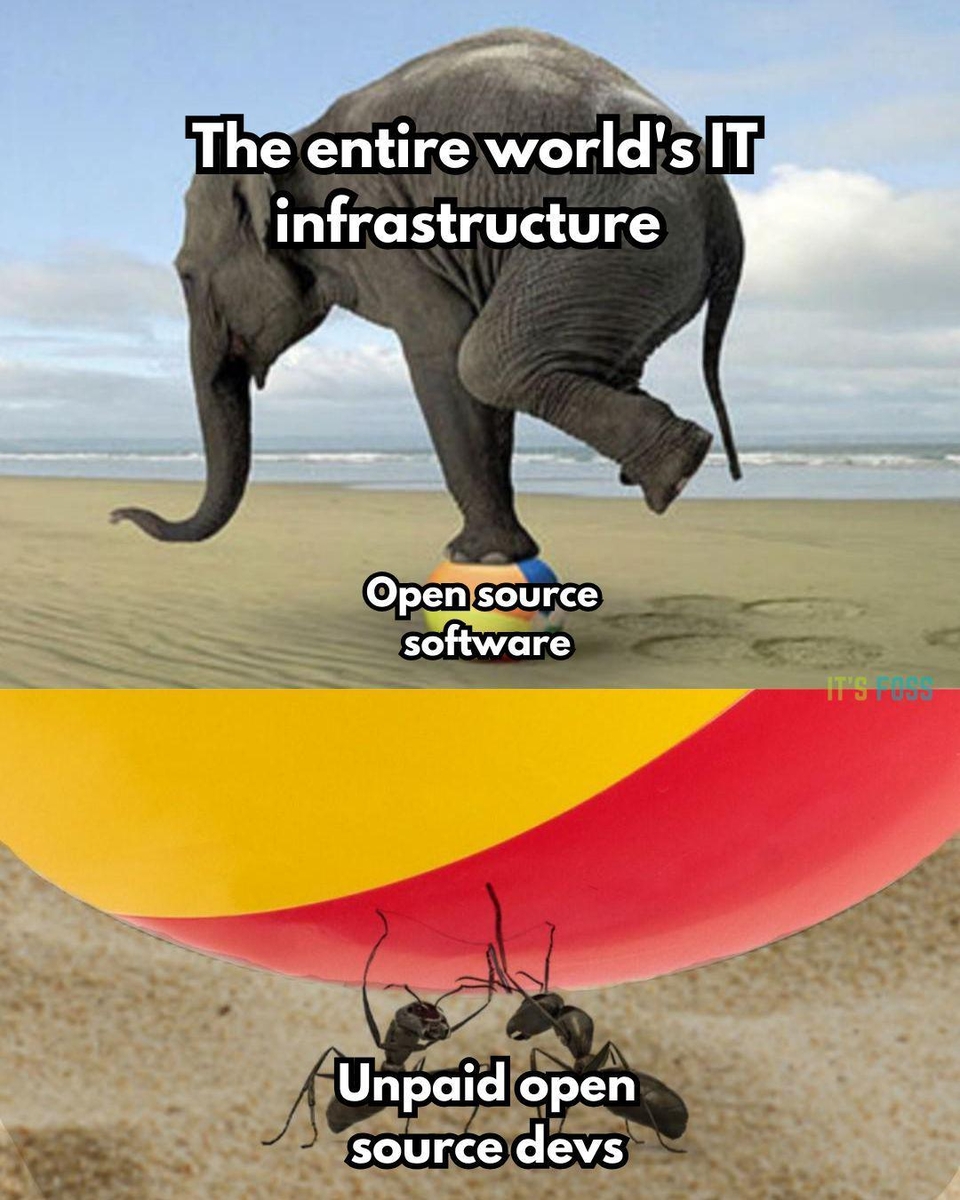
😂 Meme of the week